Timing is everything!

The next morning began the way the best ones do. One of us slipped out of bed first, got the French press going, and by the time the coffee was ready, we were both sitting over the charts figuring out the day. There is a rhythm to mornings aboard Bearcruzer — a mental checklist that moves in a particular order, covering the inside of the boat, the dinghy, the dog, and the two of us, all coordinated and timed with the quiet efficiency of people who have learned, sometimes the hard way, that order matters out here.

This was a morning for learning it again.

The departure routine goes like this: Mike raises the anchor, eases Bearcruzer into reverse, uses the bow thrusters to position her toward the mouth of the anchorage. During this maneuver, the dinghy rides alongside the boat, secured by a line that gets let out to tow length once we’re underway and moving safely away from any hazards. The key word being once. Releasing that line too soon risks one thing above all others: the line finding its way around the propeller.

You guessed it…I released the line too soon.

There was a moment — a brief, horrible moment — when everything felt fine. And then the engine stopped. Not gradually, not with any warning. Just stopped, the way engines do when something has wrapped itself around the prop and asked them very firmly to quit.

Mike lowered the anchor again and raised the engine. Sure enough: dinghy line, wound snugly and thoroughly around the propeller, looking almost smug about it. He reached for his knife, ready to cut it free. But we weren’t in any danger, the boat was secure, and so we took a breath and took our time. I worked the line loose by hand, turn by turn, and managed to free it completely — intact, no damage done. The engine, bless it, started right up the moment the line was clear.

We looked at each other. We did not say much.

There is a reason the morning routine runs in a particular order, in a particular way, with particular timing. It isn’t habit for habit’s sake — it’s two people, a dog, and a boat operating as a system, and when one piece moves out of sequence, the whole thing knows it.

Lesson learned. Again. Don’t rush. Do things right, in the right order, and trust the system — and the person running it alongside you.
Now. On to the next adventure.

Bald Indian Bay

Lake of the Woods does not let you get comfortable.

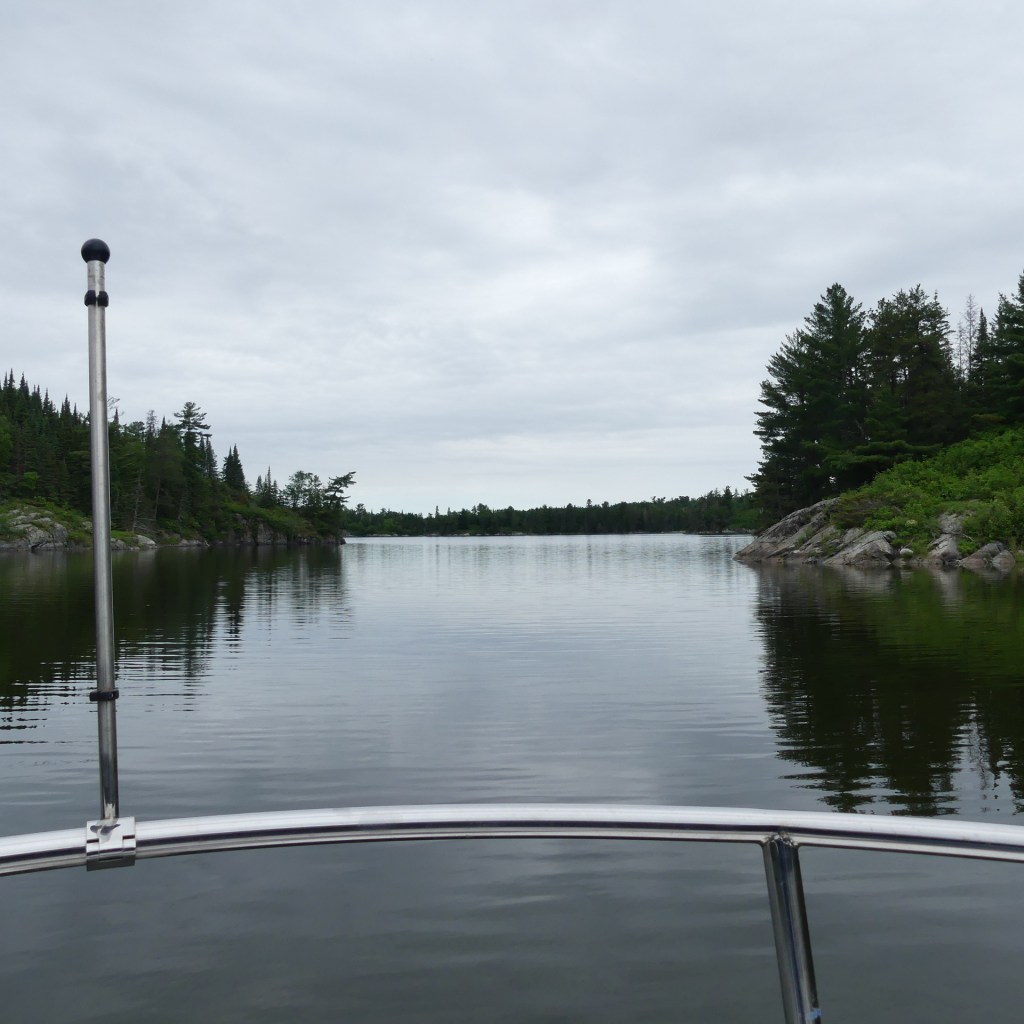
After topping off at Devils Gap and leaving Kenora behind, we decided to take a slightly different route out just to mix things up — and the lake immediately reminded us why it demands our full attention. Out here, route planning is less a fixed itinerary and more a loose suggestion. We’re constantly scanning for rocks and hazards lurking just below the surface, cross-referencing the GPS for shallow water, and cheerfully abandoning the plan whenever something interesting catches our eye.

The shallow water alarm still catches us off guard on occasion. There’s a particular kind of collective breath-holding that happens aboard Bearcruzer when that thing goes off — eyes on the depth sounder, eyes on the water, nobody saying much. We’ve learned, though, that we tend to have about two feet under the keel even when the alarm insists otherwise. We are wary. We are watchful. And we are, so far, still floating. Whew.

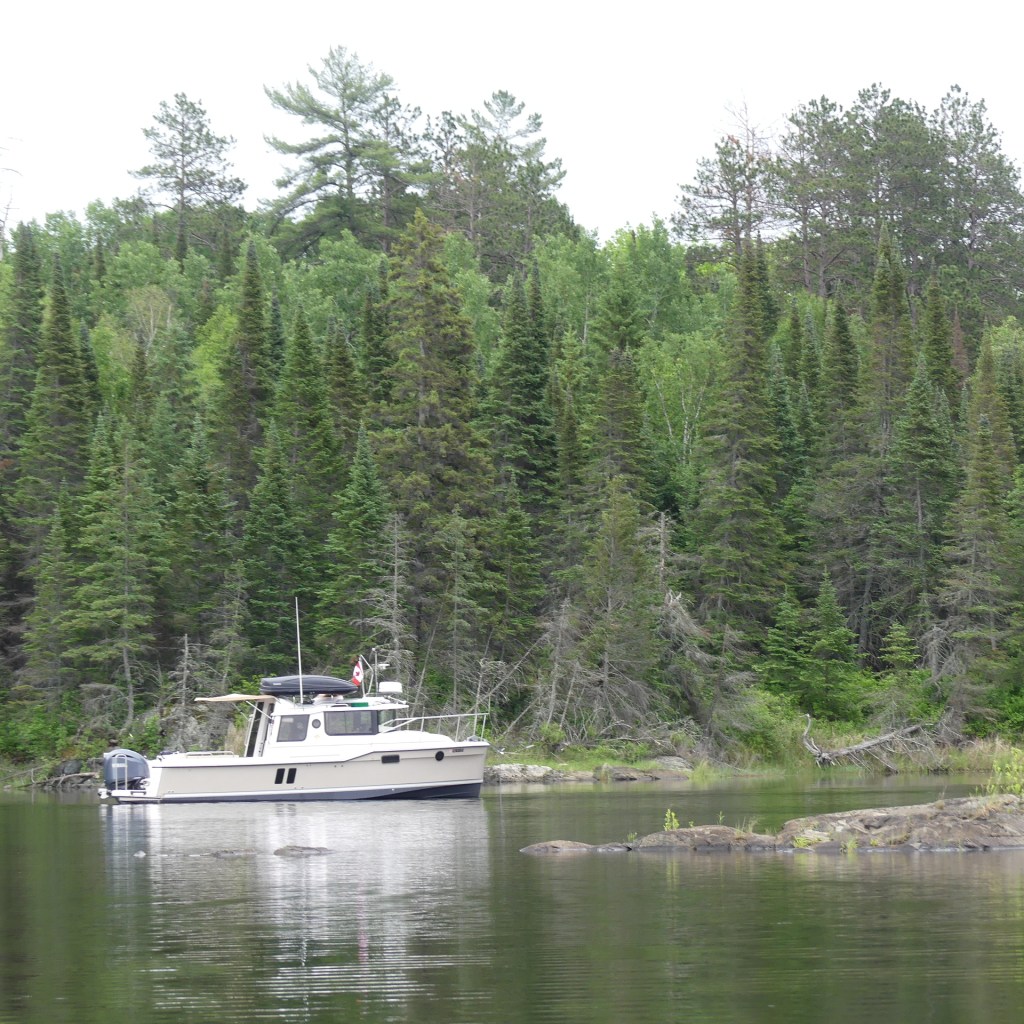
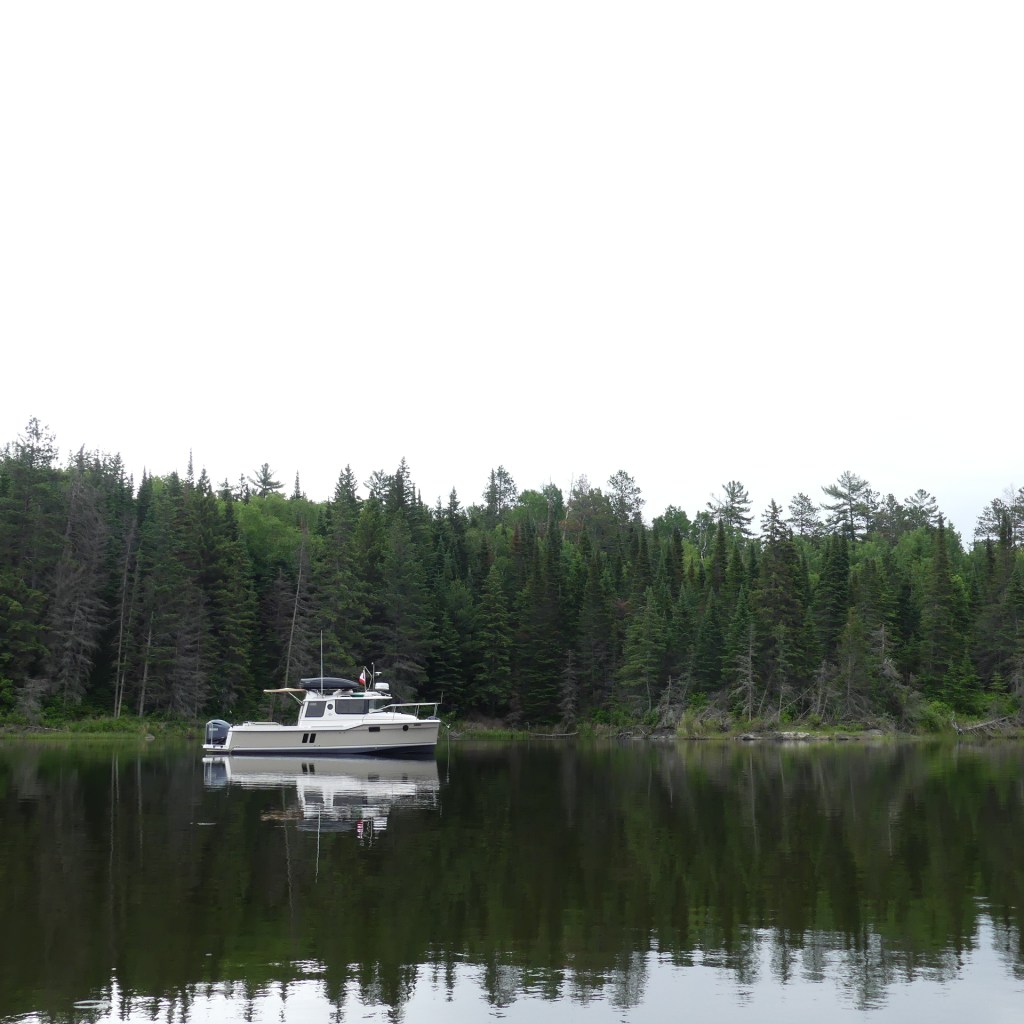
We headed south, then east, and turned Bearcruzer up into Bald Indian Bay, where we found another lovely nook tucked into the northwest side of Sultana Island. And just like our first night in Canadian waters, a Bald Eagle was waiting for us — perched in a tree above the anchorage as if he’d been expecting company. We exchanged a glance. Thanks Dad. Some things don’t need to be said out loud.

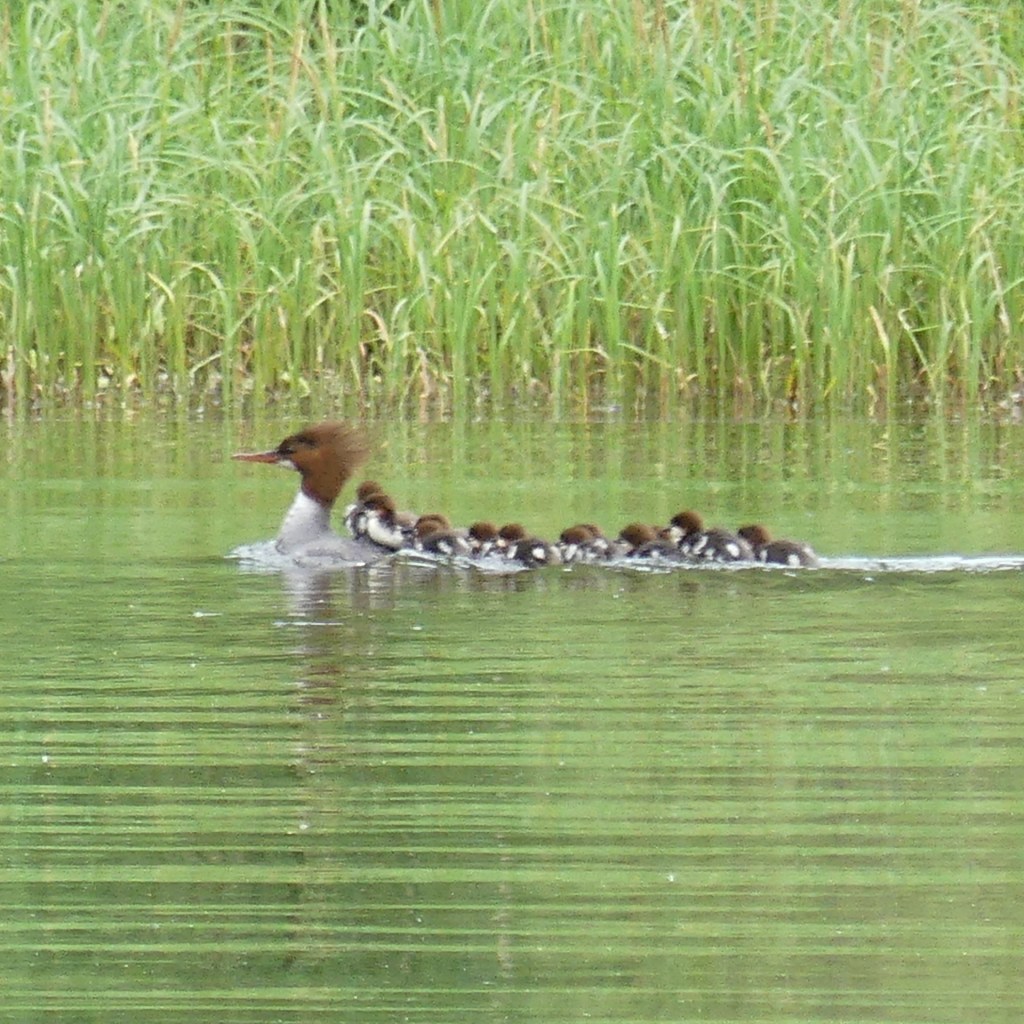
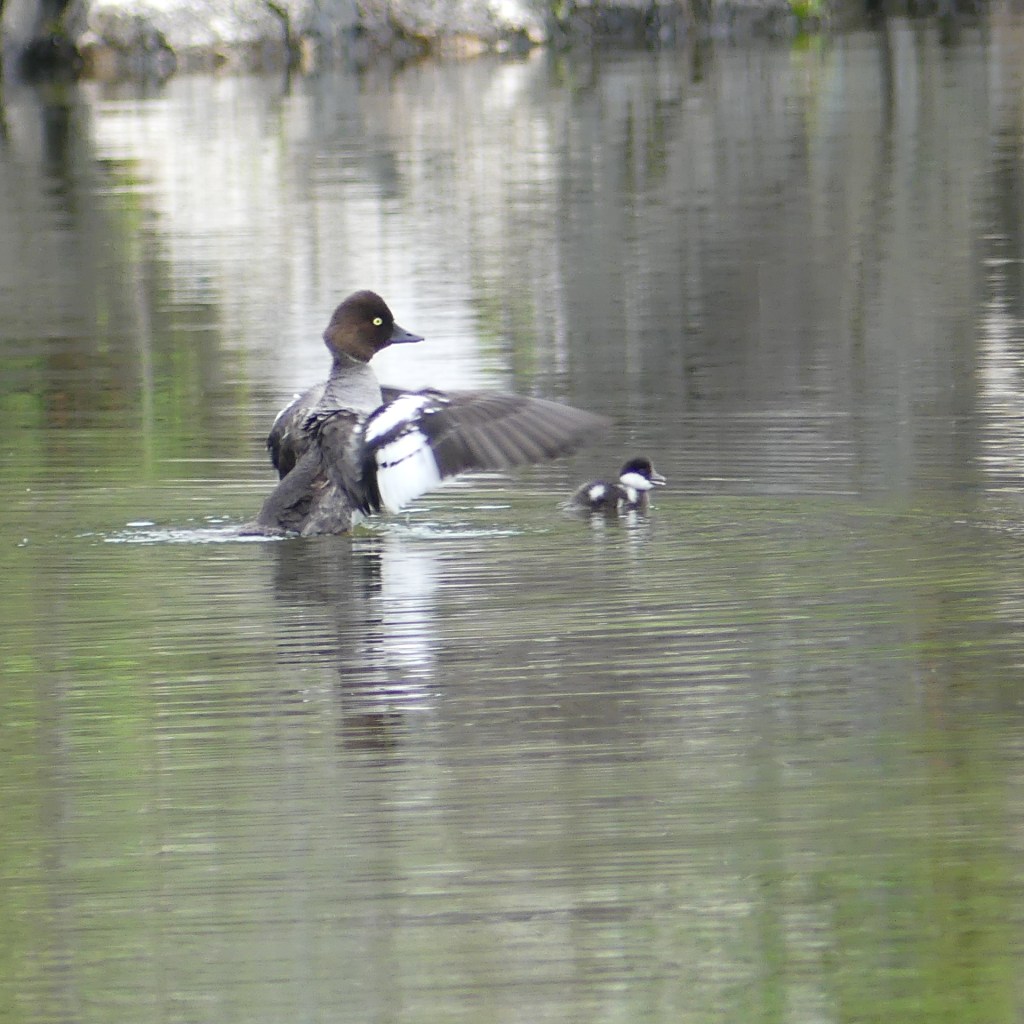
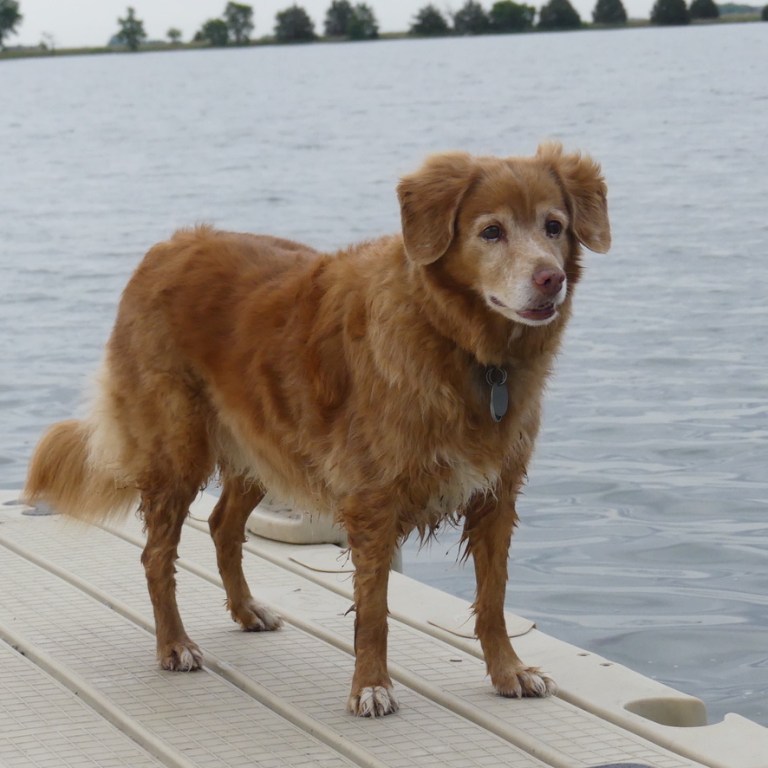
A mother Common Goldeneye Duck and her baby paddled by inspecting us as we set the anchor, apparently satisfied with what they found, and Sierra made it very clear that the official welcome committee could wait — she needed to go ashore.

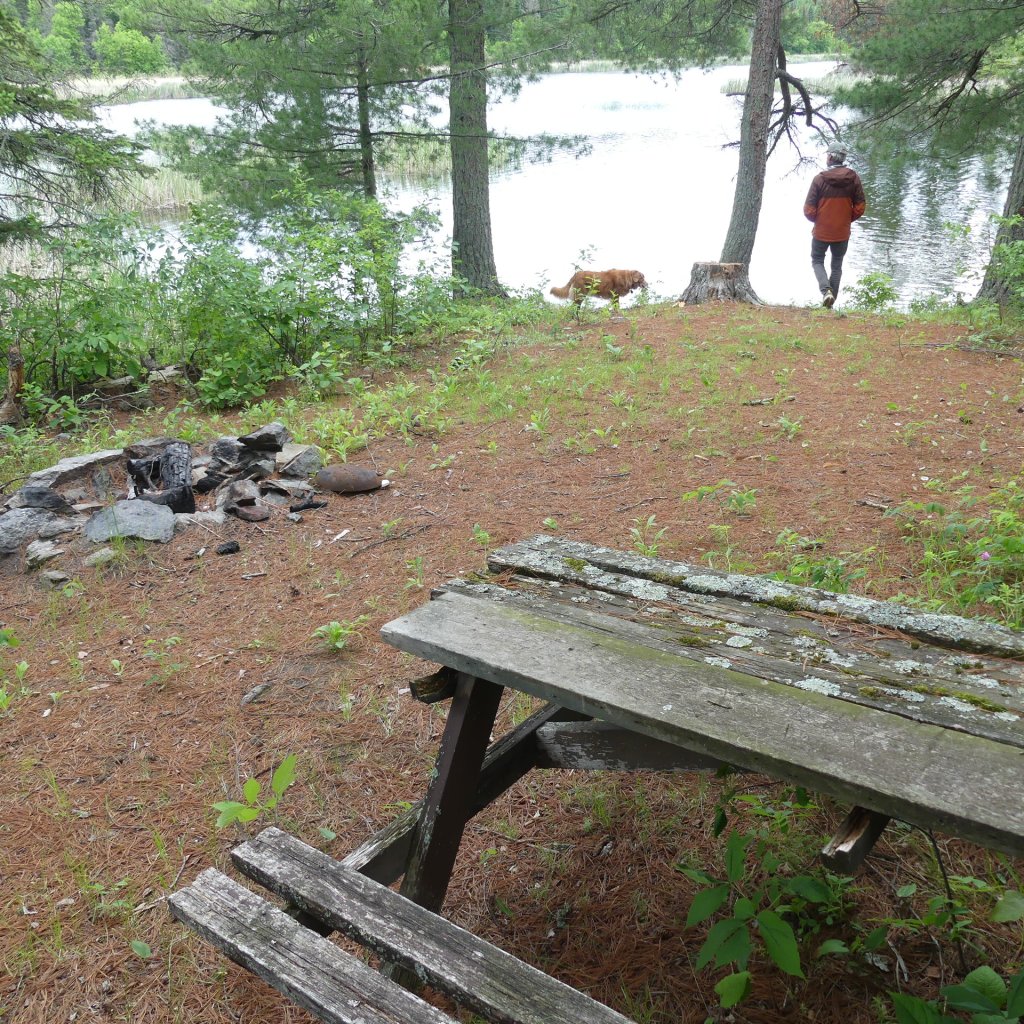
We loaded into the dinghy and set off to explore the northernmost point of Sultana Island. Rounding the point, we came across something genuinely rare on this lake: a clearing. Open ground is hard to come by out here, where the boreal forest grows straight down to the water’s edge, so we pulled the dinghy up and went to investigate. The clearing had clearly been discovered before us — a small dock tucked into the reeds, a weathered picnic table, a fish cleaning plank, a fire pit, and a handful of empty bottles that suggested more than a few good evenings had been spent in this spot. We couldn’t argue with the taste of whoever found it first.

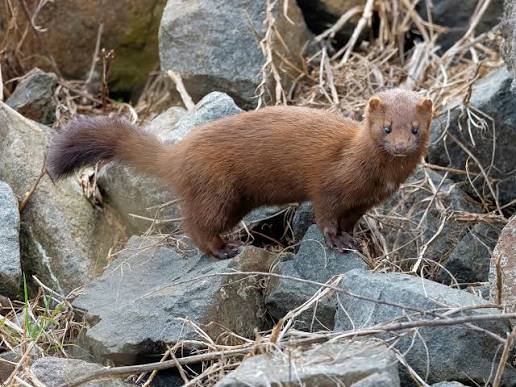
Back in the dinghy and rounding a small rocky island off the point, the afternoon offered up one more surprise. A redwing blackbird was putting up a tremendous fuss — dive-bombing something small and brown moving through the rocks below. I asked Mike to circle the dinghy back around.

A mink. An actual wild mink, going about its business, entirely unbothered by the bird’s outrage.

I was absolutely tickled. There is something deeply satisfying about seeing a mink in its natural habitat rather than draped across someone’s shoulders at a cocktail party.

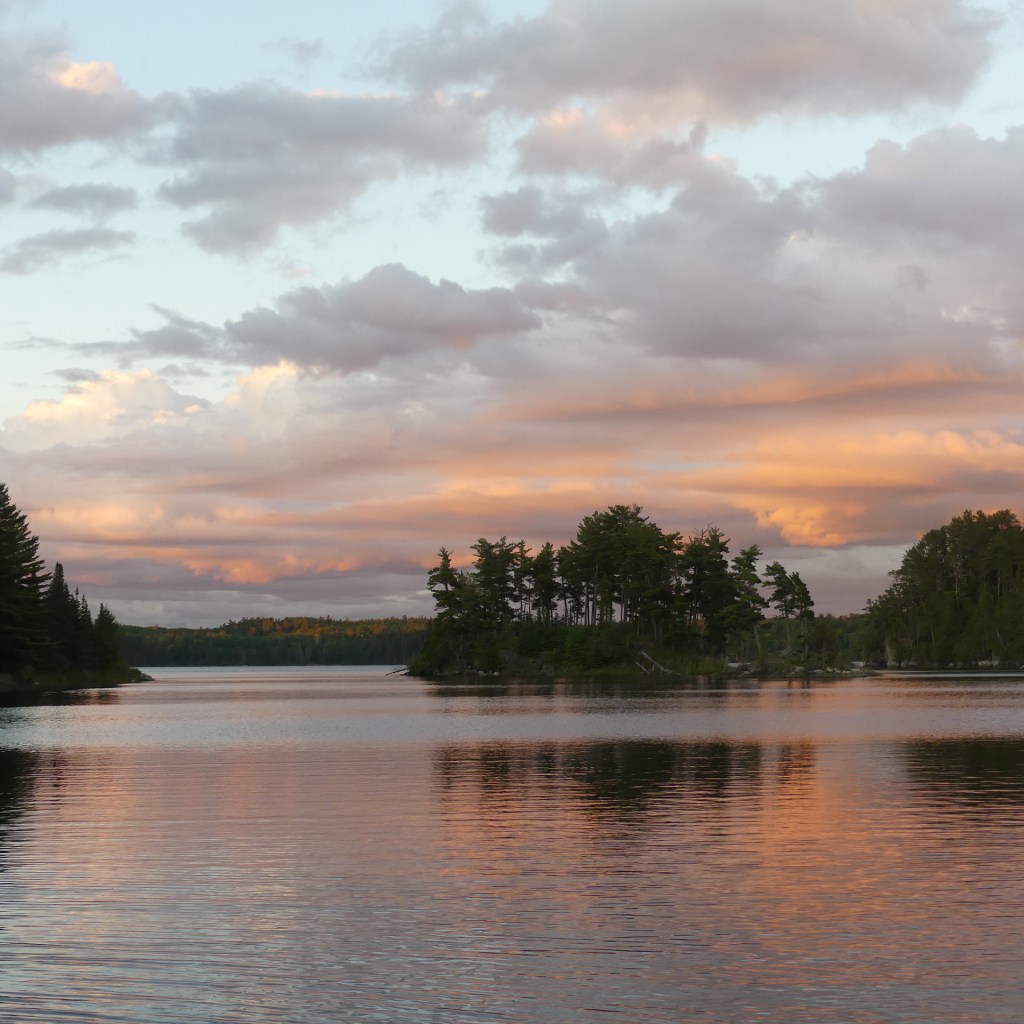
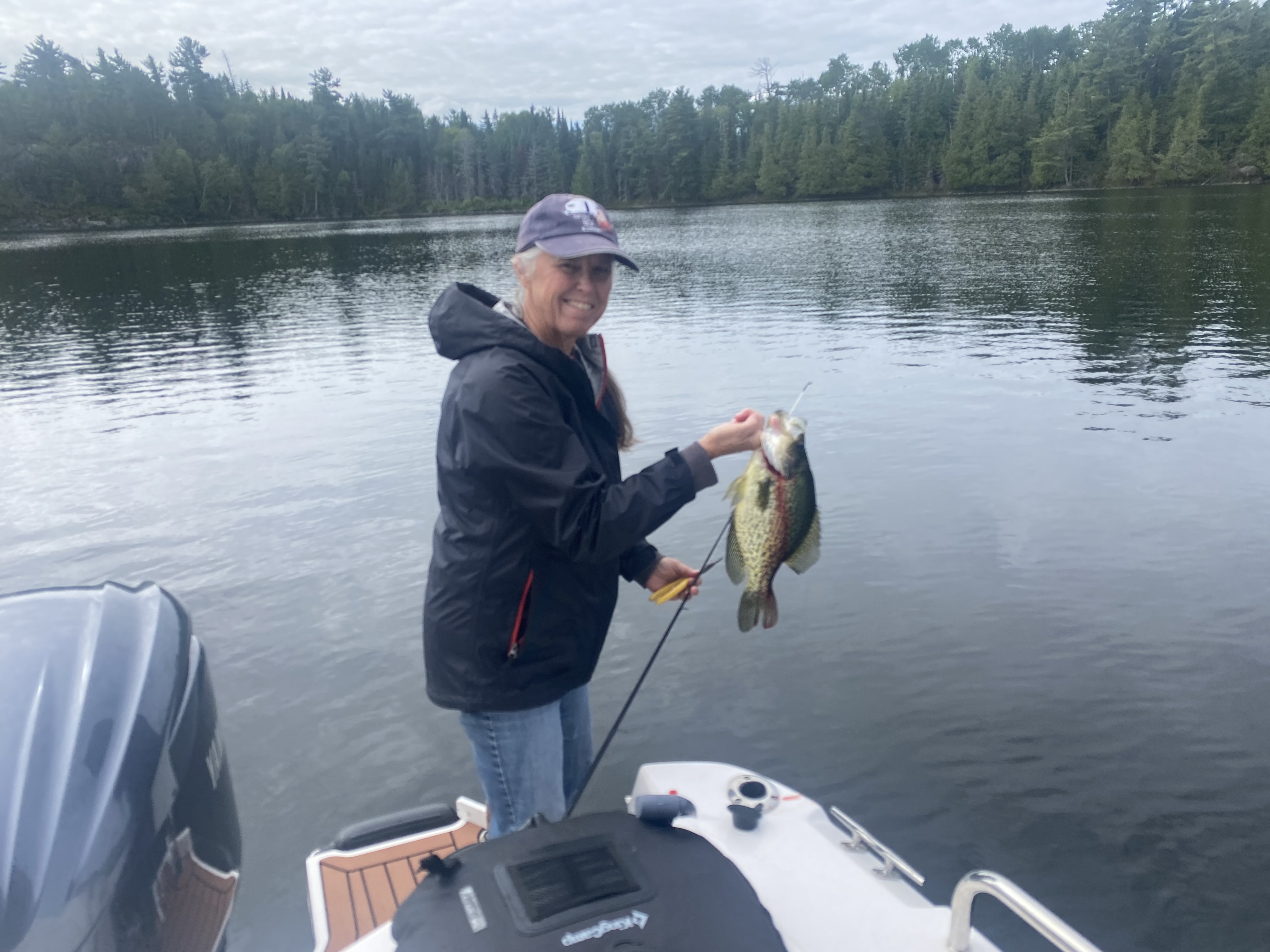
We spent the rest of the afternoon in that glassy cove, the kind of afternoon that’s hard to describe without sounding like you’re bragging. Mike fished off the stern. I settled in with my book. Something good came off the stove as the light went golden. The eagle called. The water barely moved.

Some days out here are about the miles. This one was about the stillness.

Where Do You Think You Are?

It started, as so many of Mike’s projects do, with a problem to solve.

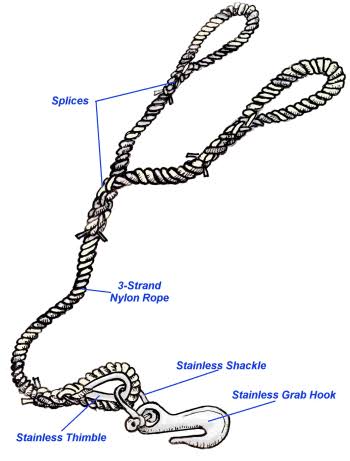
He’d noticed that on breezy nights, Bearcruzer has a tendency to swing around her anchor line and make enough noise to interrupt a good night’s sleep. Solution: an anchor snubber bridle, rigged from what we had on hand. It worked well enough, but Mike being Mike, he immediately identified the one thing that would make it work better. “What we really need is a shackle. Let’s pick one up before we leave town — we should be able to find one at the marina when we refuel.”

Reasonable assumption. As it turned out, a bit optimistic.

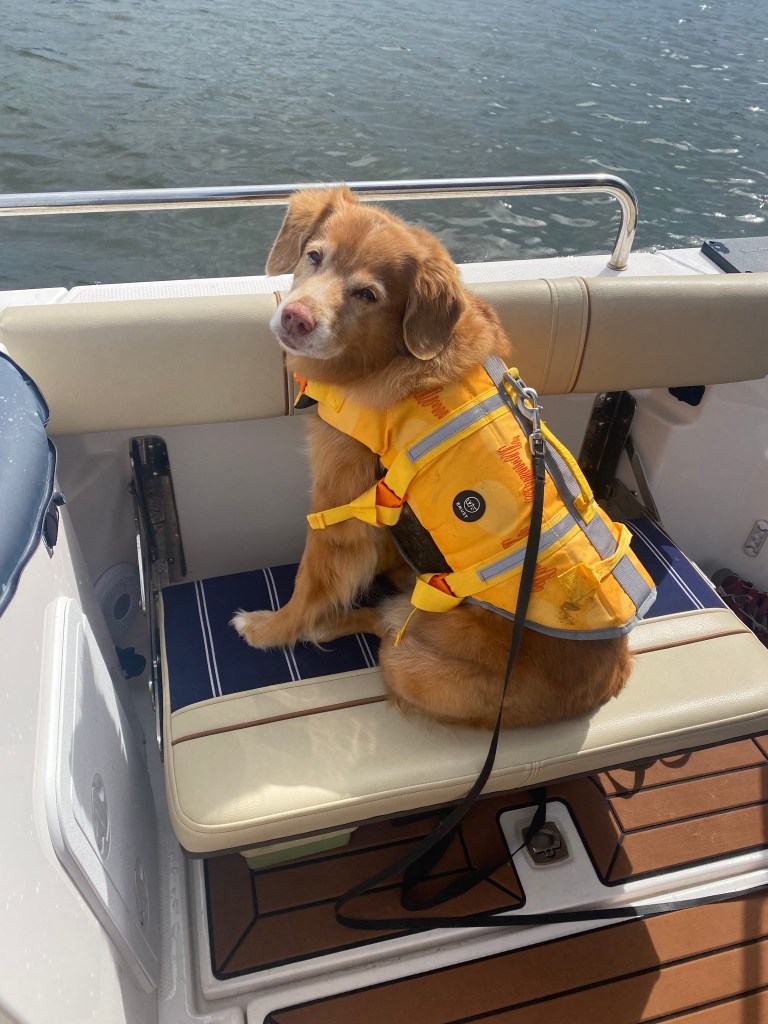
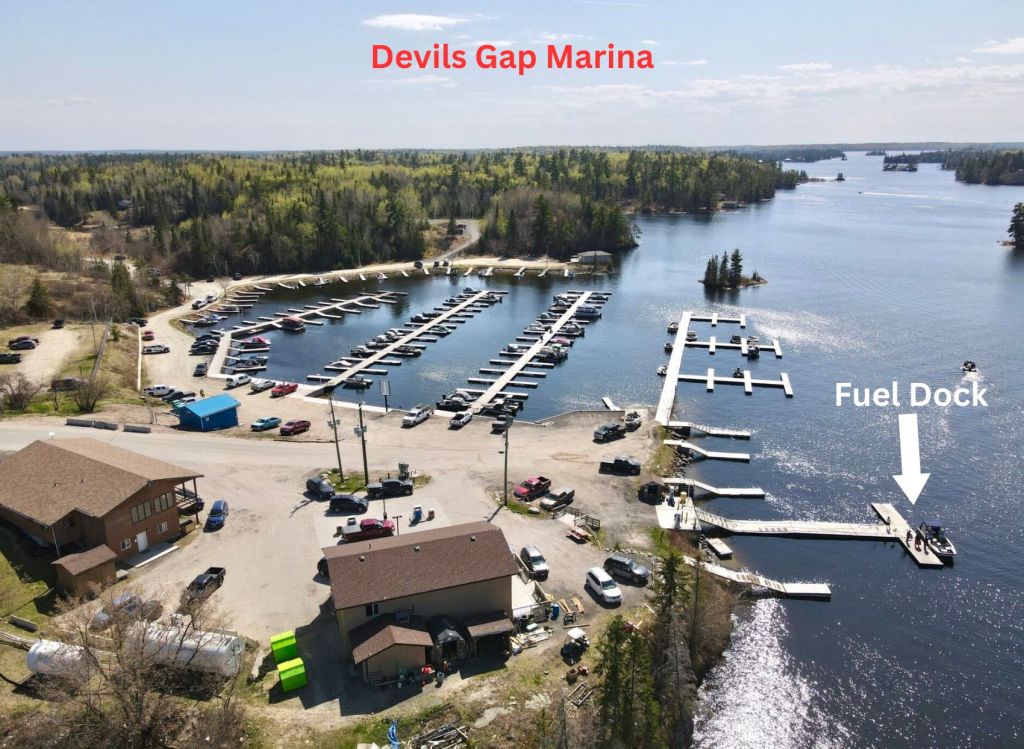
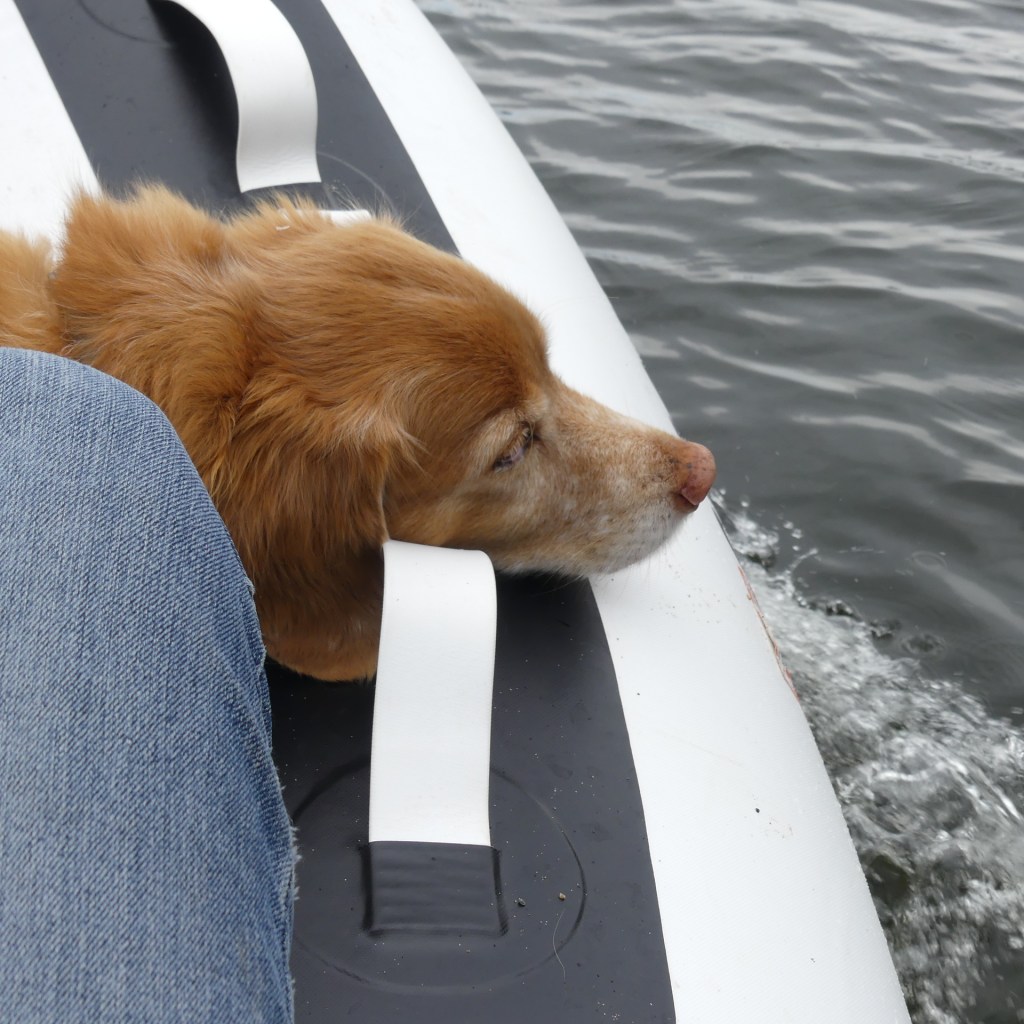
But first, a lovely morning neighborhood walk, breakfast aboard Bearcruzer, and the important business of dressing Sierra in her very fashionable lifejacket. With the crew properly outfitted and fed, we made our way to Devils Gap Marina to top off the fuel tanks before leaving the comforts of civilization and heading out into the wilds of Lake of the Woods.

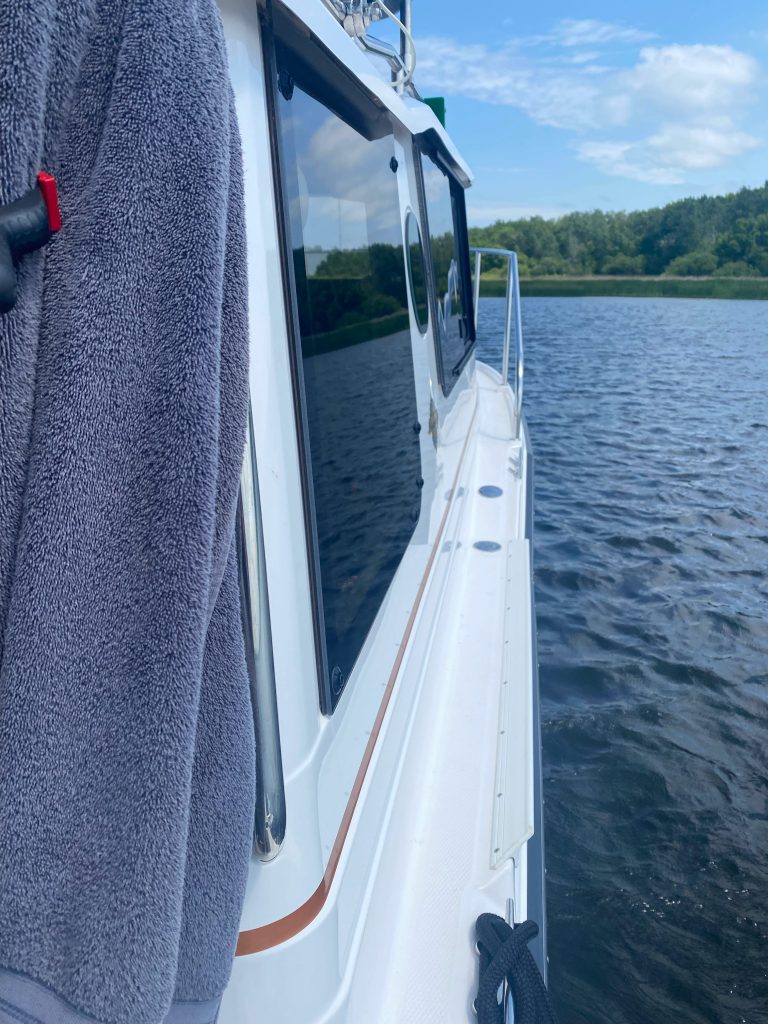
Refueling Bearcruzer is its own little production. It begins with a slow approach, binoculars raised, scanning the docks to figure out where the fuel actually is. Then comes the wind assessment, the bumper decision, the dock line strategy — and then my personal favorite part: the delicate dance of getting myself, the bumpers, and the lines all the way around the narrow gunwale and into position before we arrive. It is a choreographed routine at this point, and I will say we are getting better at it.

While the dock attendant topped off our tanks, Mike and I headed up to the marina store in search of the shackle. The store turned out to be more convenience store than marine outfitter — snacks, sundries, a healthy selection of fishing lures — but hardware? Slim pickings. We asked the person behind the counter if they had any shackles.

A blank stare.

“What’s a shackle?”

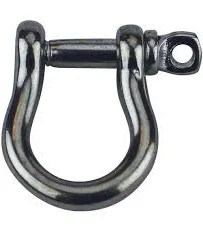
We explained. A shackle is a U-shaped metal fastener with a pin across the opening, used to connect lines and fittings — in this case, to complete Mike’s anchor snubber bridle.

Another pause.

“What’s a snubber?”

And there it was. The moment it became completely clear that we are not in coastal cruising territory anymore. Lake of the Woods has over 65,000 miles of shoreline when you count its 14,000-plus islands and the surrounding mainland. It is a vast, magnificent, fish-filled wilderness. It is not, however, a place where the marina store stocks shackles — or where anyone particularly needs one.

We thanked them, smiled, and headed back to the boat. We’ll make do with what we have.

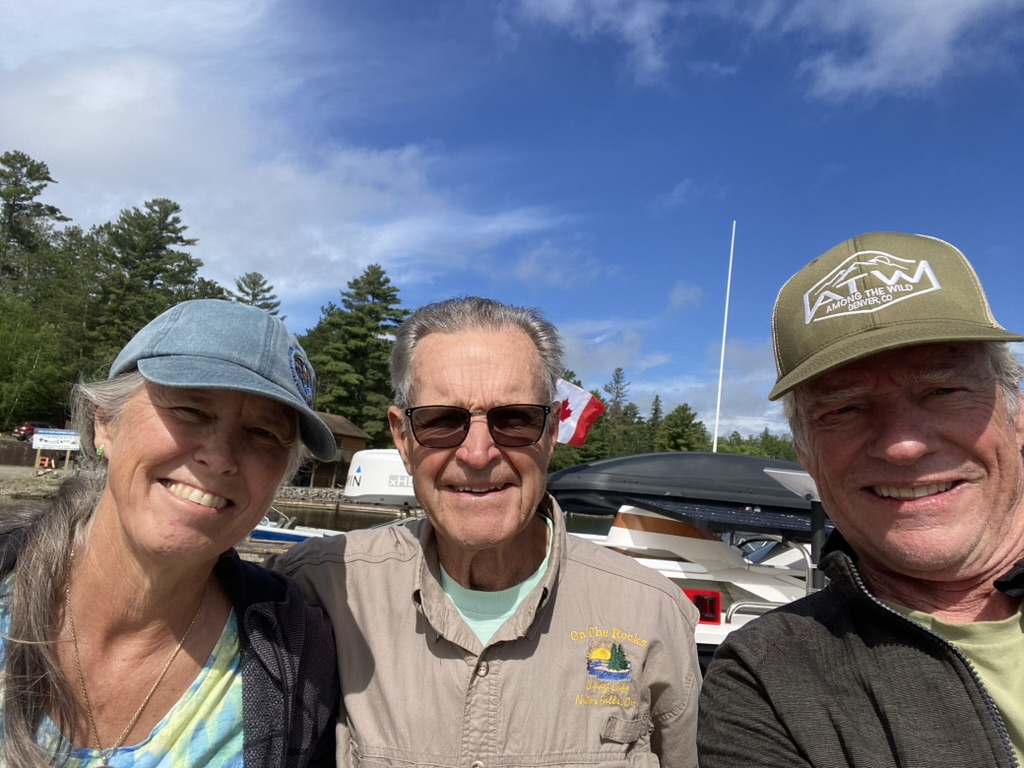
As Mike’s hat says: Among the Wild.

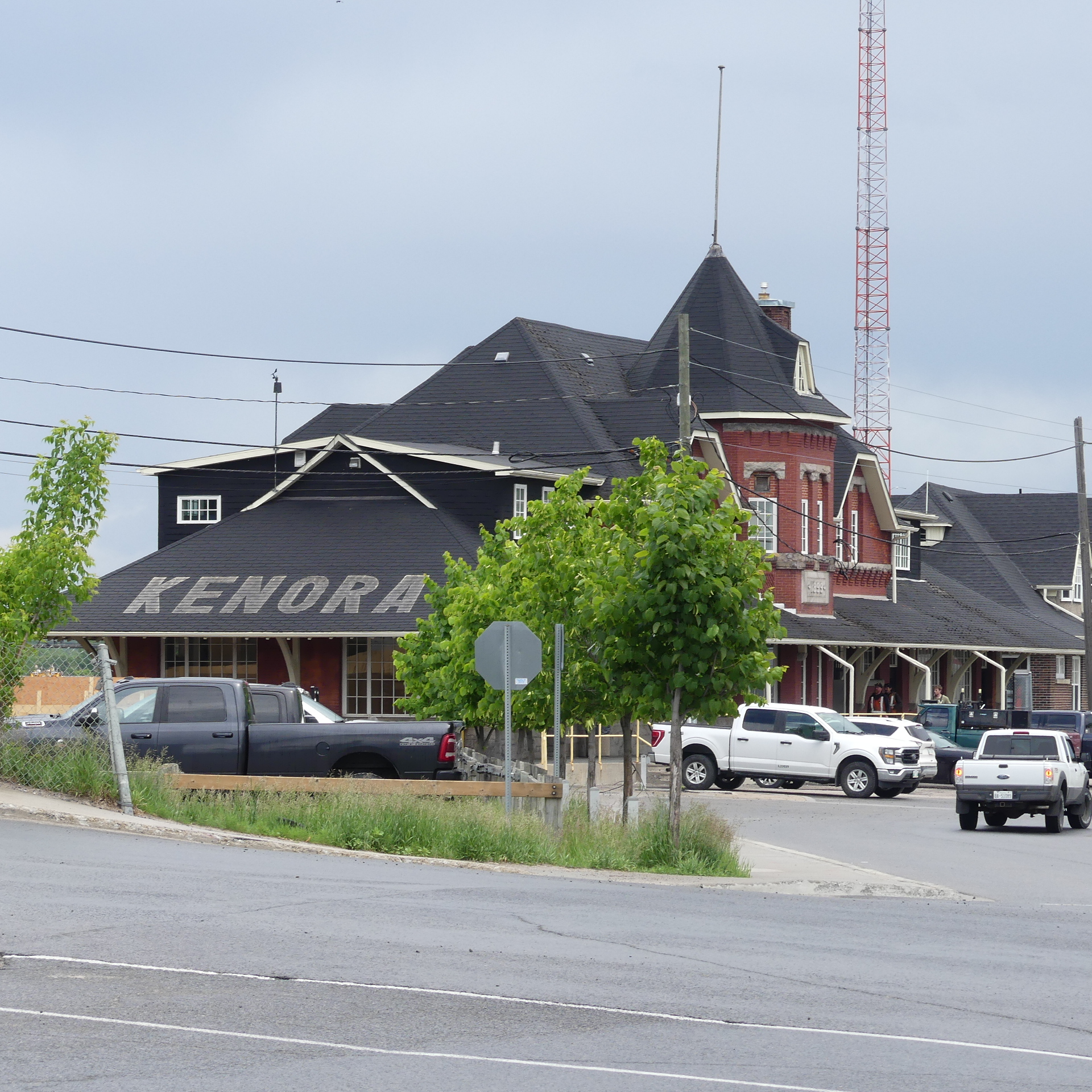
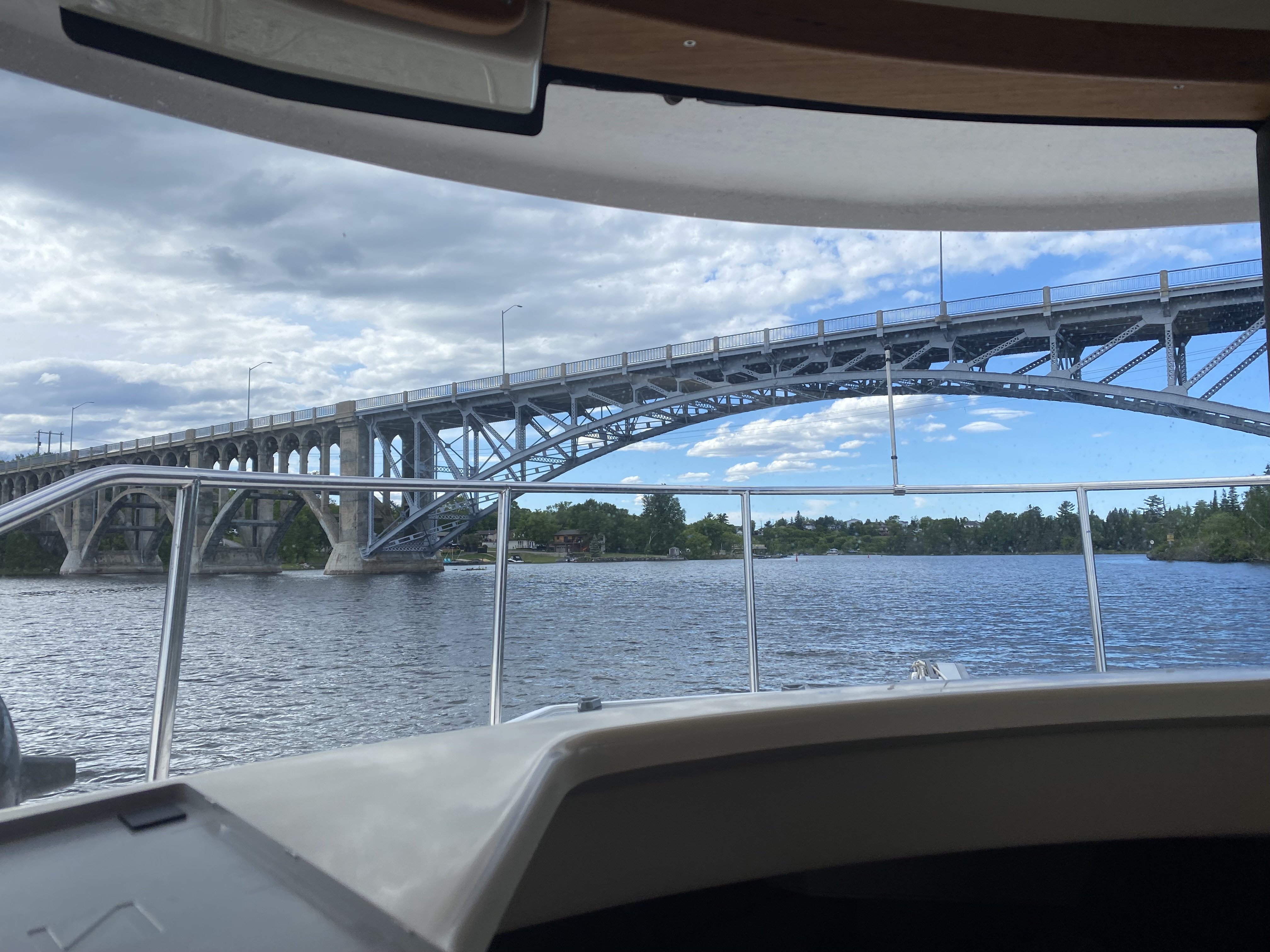
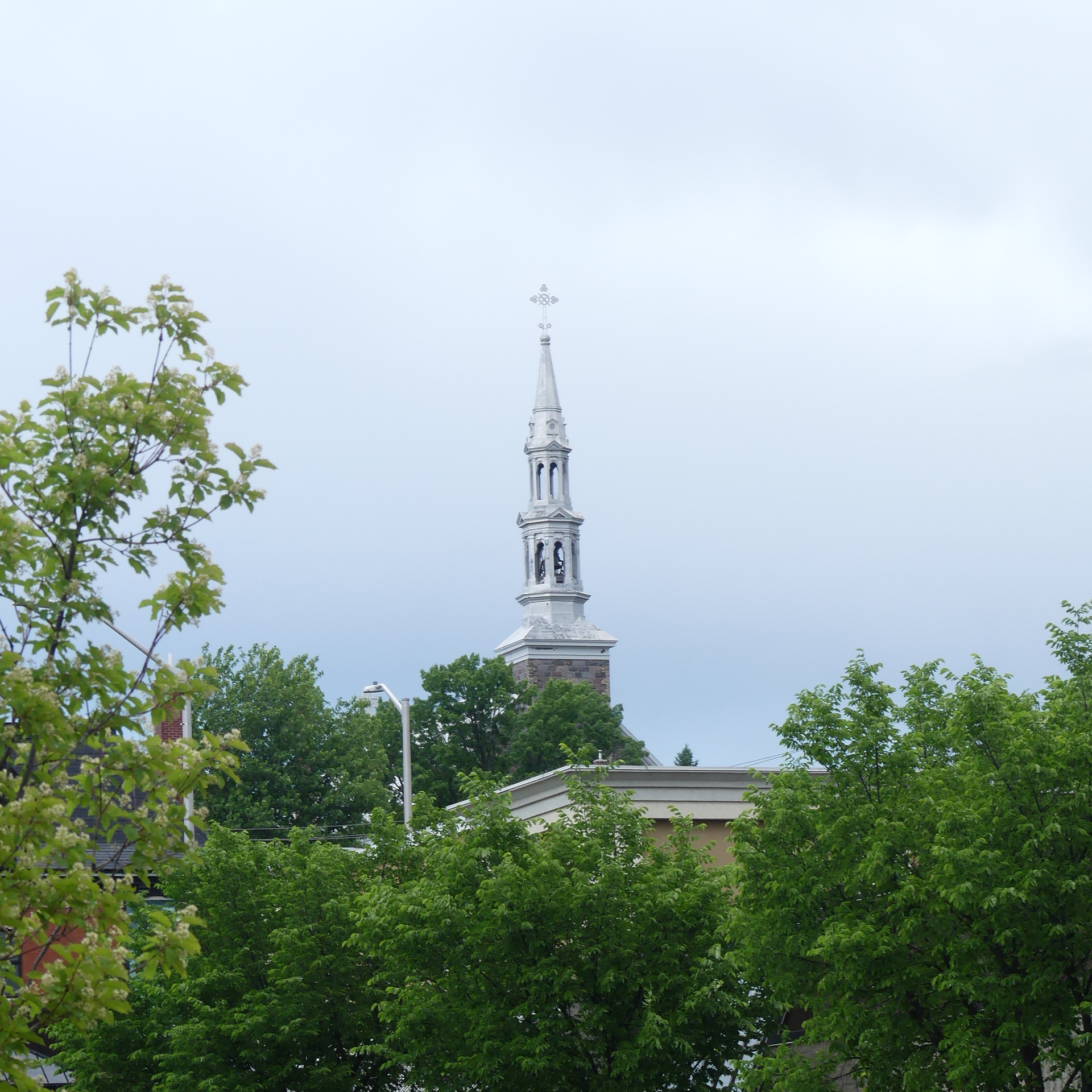
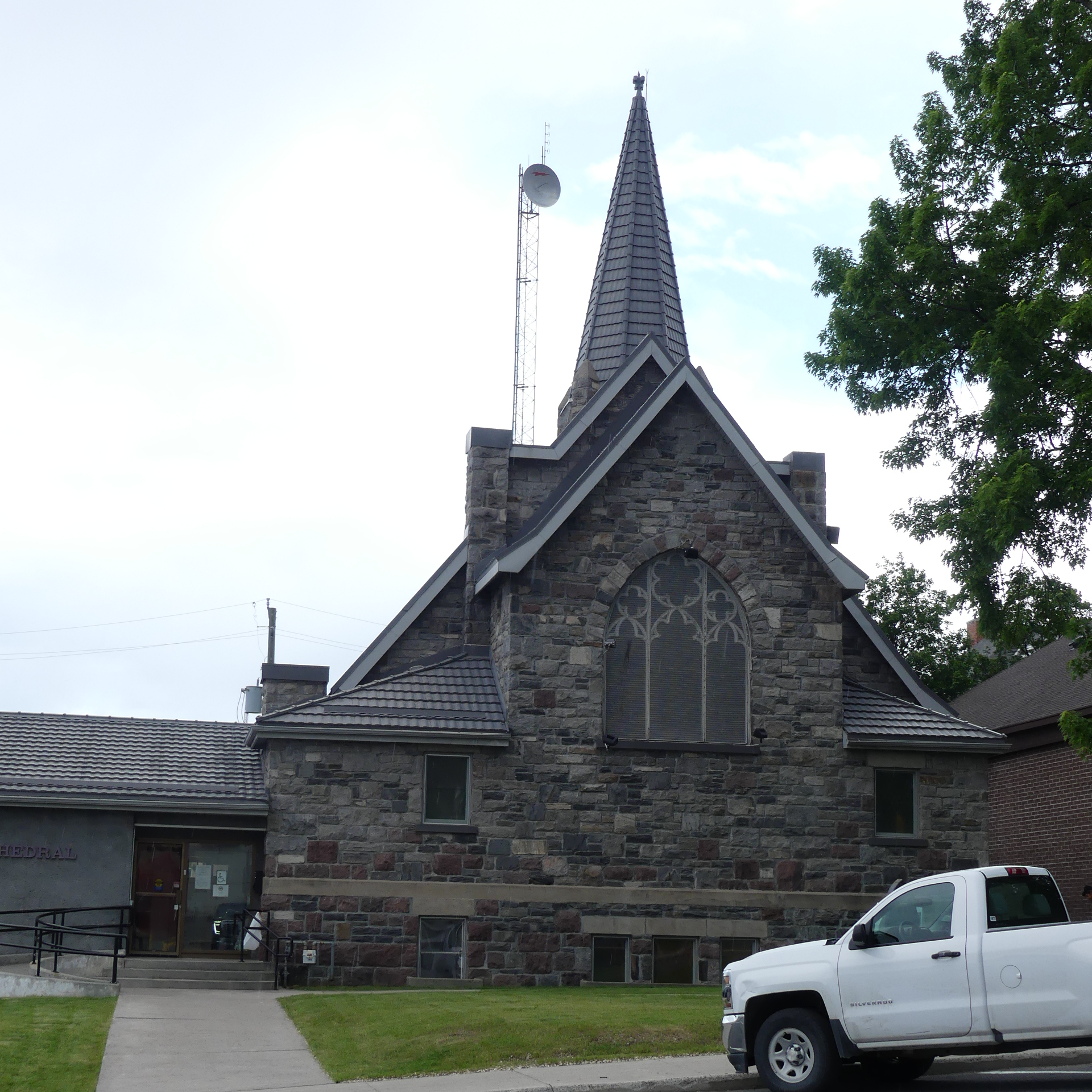
A Stop in the Town of Kenora

Leaving “Marty’s” anchorage was harder than we expected. There’s something about a place that greets you with butterflies and Bald Eagles that makes the anchor feel heavier when it’s time to go. But explore we must, and besides, Canada wouldn’t allow us to bring in any fresh fruits and vegetables, so onward to Kenora it was.

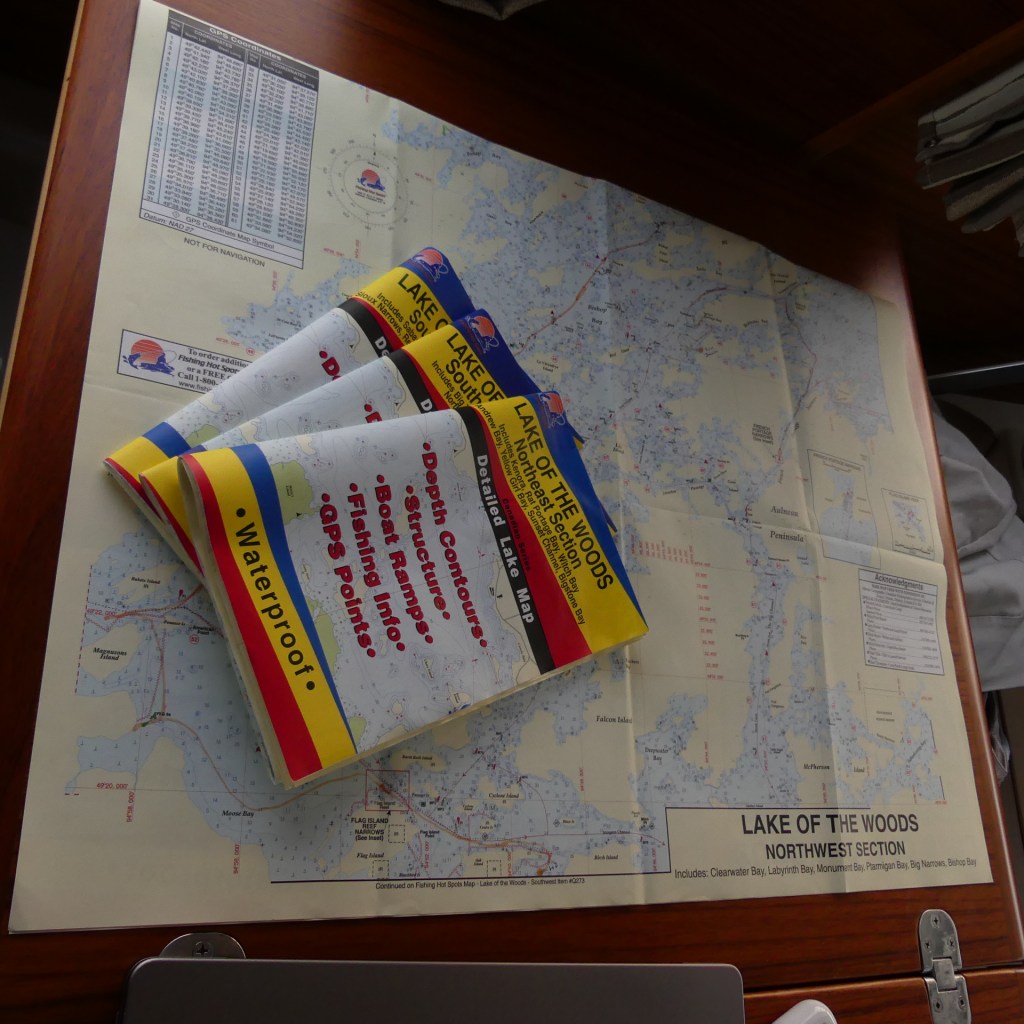
We followed the main route northeast for about 22 miles at our usual fuel-conserving trawler pace of 7 to 8 mph, and we’ve been leaning heavily on the Canadian Series Detailed Lake Maps published by Fishing Hot Spots to find our way. Lake of the Woods is enormous — the sixth largest lake in the USA after the Great Lakes, as our CBP officer reminded us — with so many islands and channels that route planning without a good paper chart feels like a fool’s errand. We use the maps to get the big picture and plot our course, then trust the GPS to keep us honest on the way there. Highly recommend them to anyone cruising these waters.

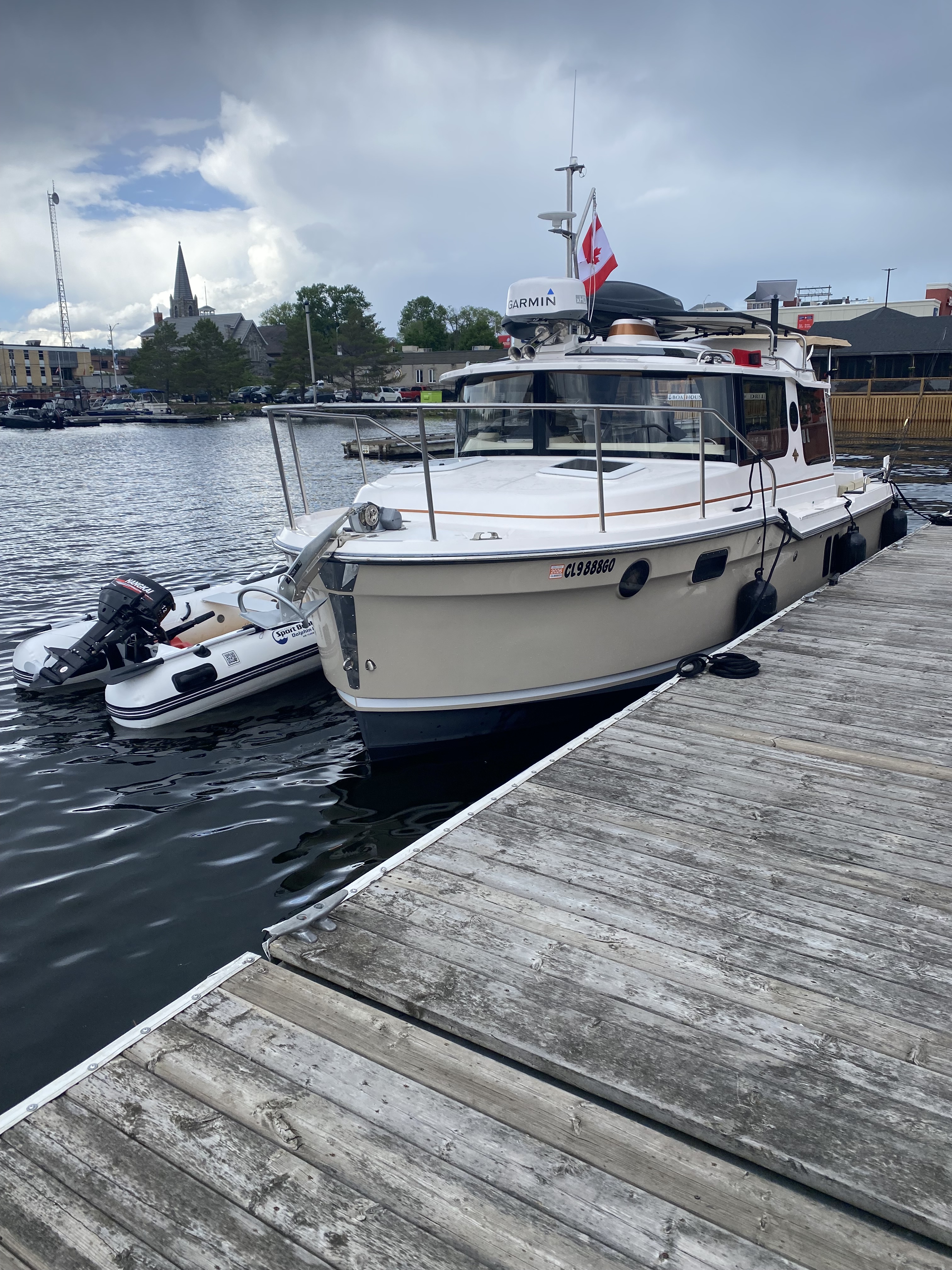
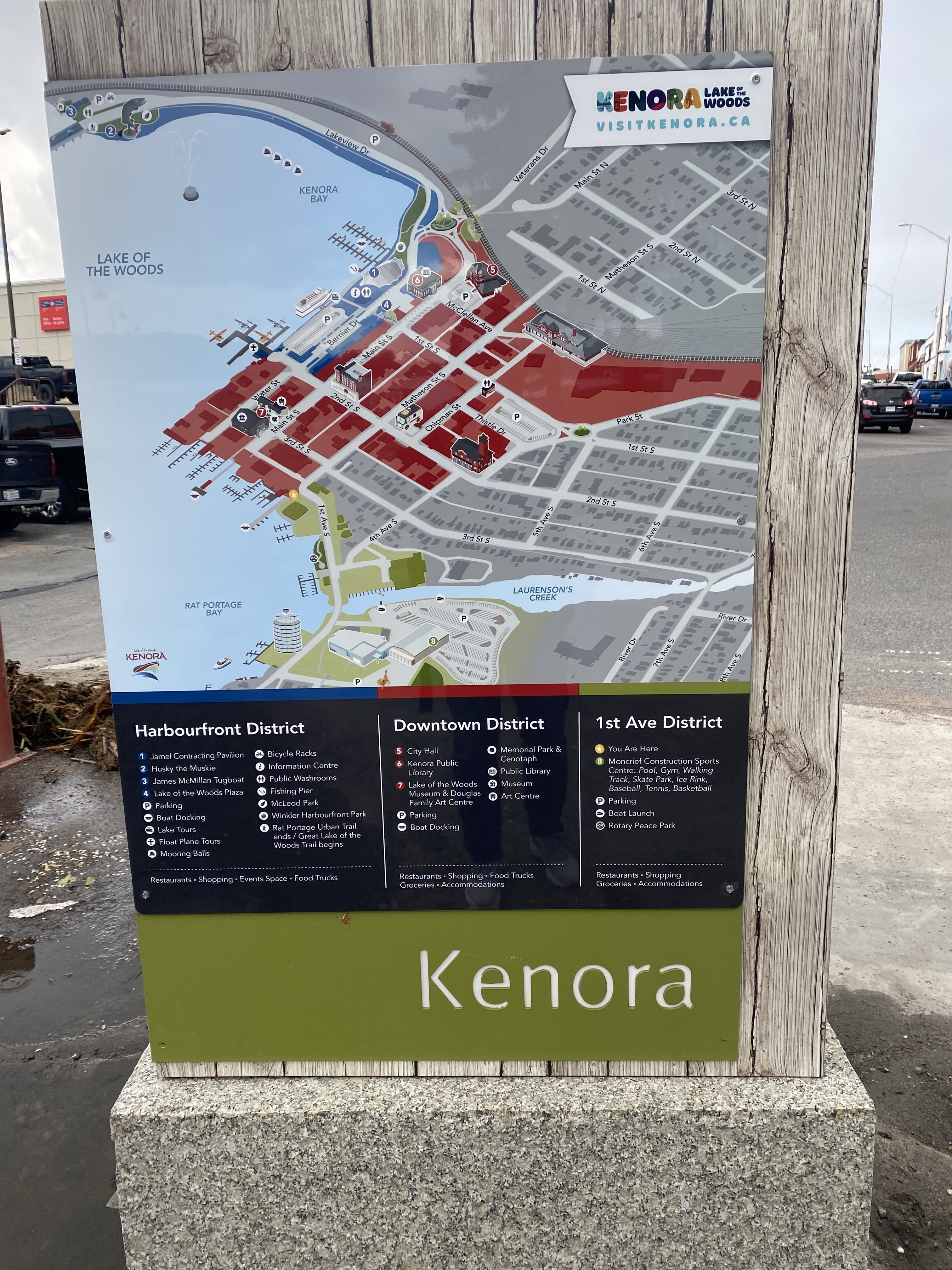
Kenora turned out to be a genuine little Town, a welcome sight after days in the wilderness. We tied up at the public dock and explored the area closest to the waterfront before making the walk to the local Safeway to restock on fruits, vegetables, and a little wine and beer for evening happy hours at anchor. There are smaller docks right next to the Safeway for boaters who want to arrive by dinghy, but after a full day of cruising, it felt good to just walk, bags and backpack in hand, stretching our legs on solid ground like regular people.

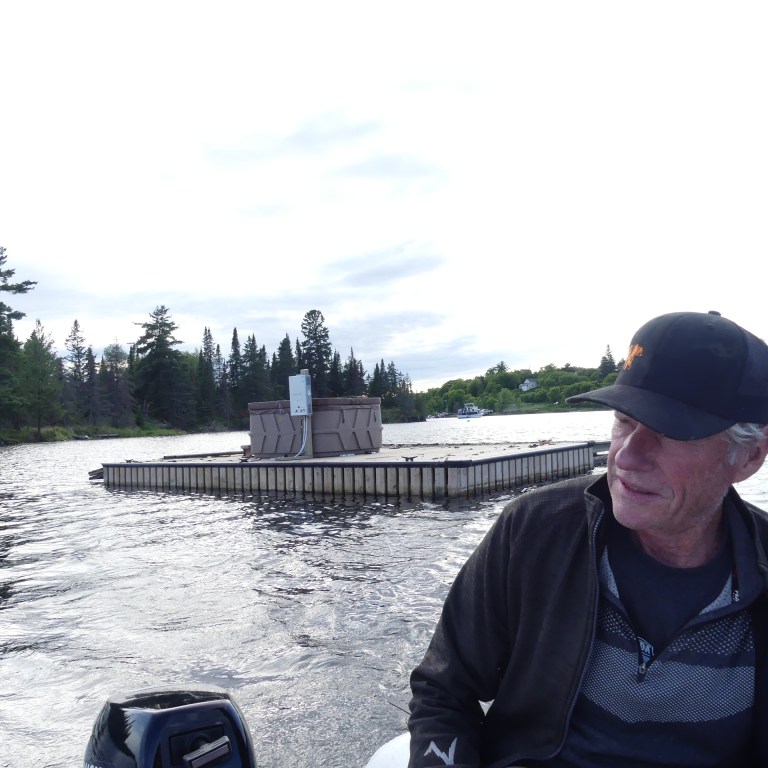
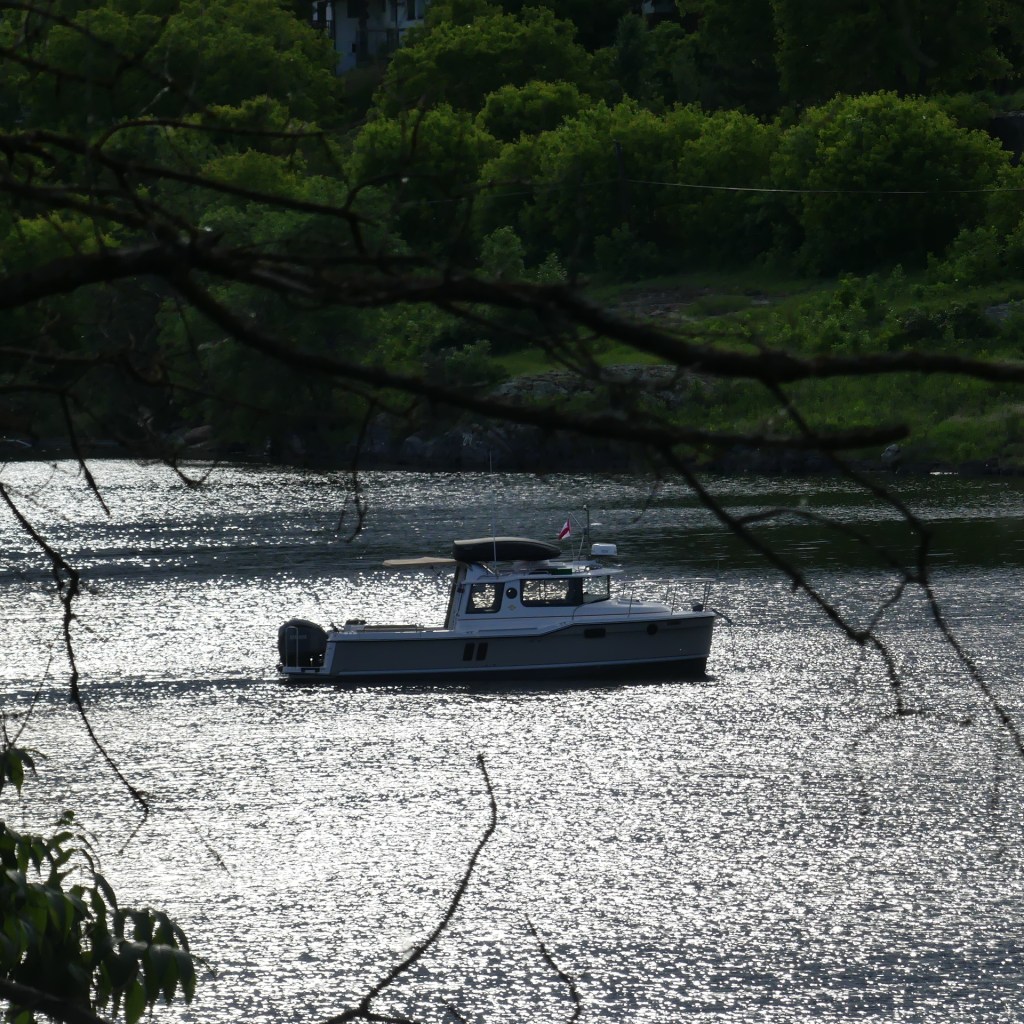
With the provisioning done, we checked the charts and found a well-protected anchorage just northwest of town in Keewatin Bay. We settled in alongside a moored houseboat and an older yacht, neither of them occupied, which suited us fine. And then we noticed it: sitting out in the middle of the bay, moored to nothing in particular, was a floating swim platform — with a hot tub on it. We did not investigate whether it was operational. Some mysteries are better left unsolved.

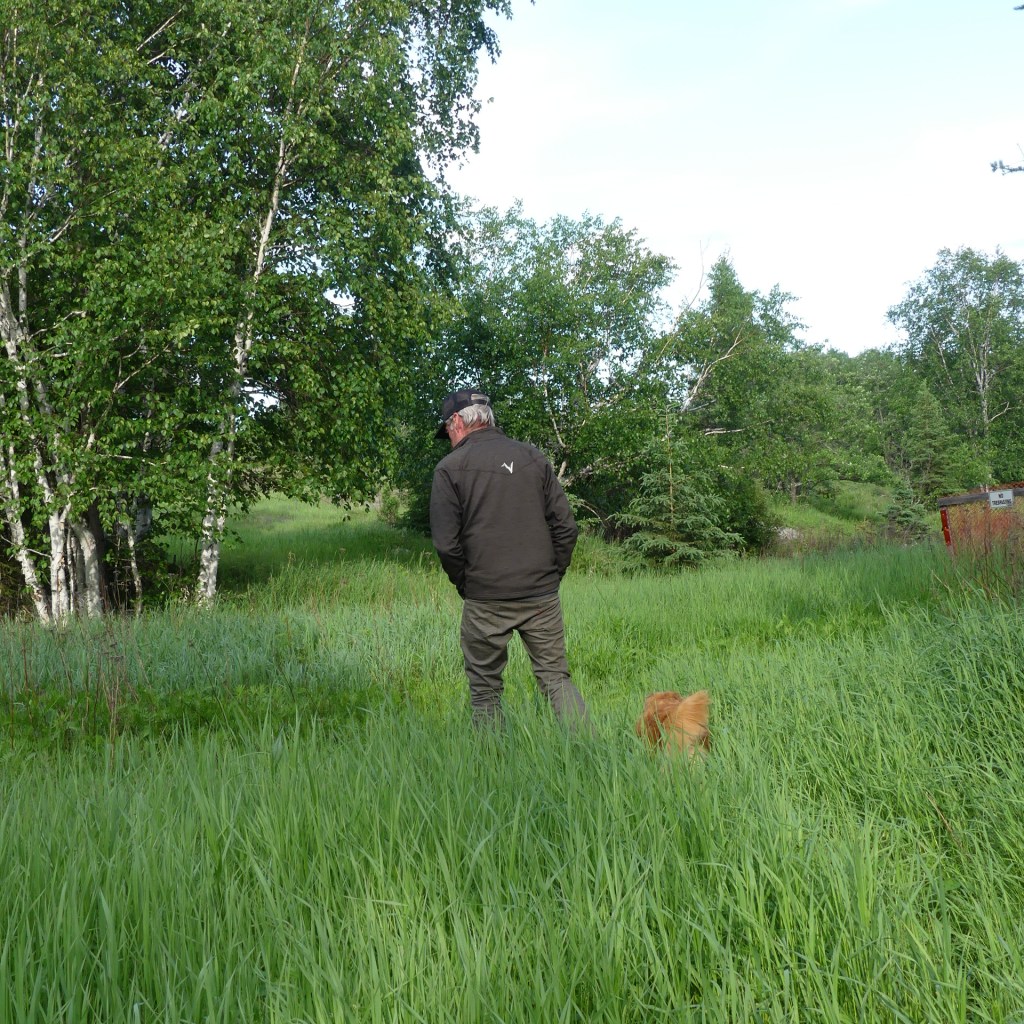
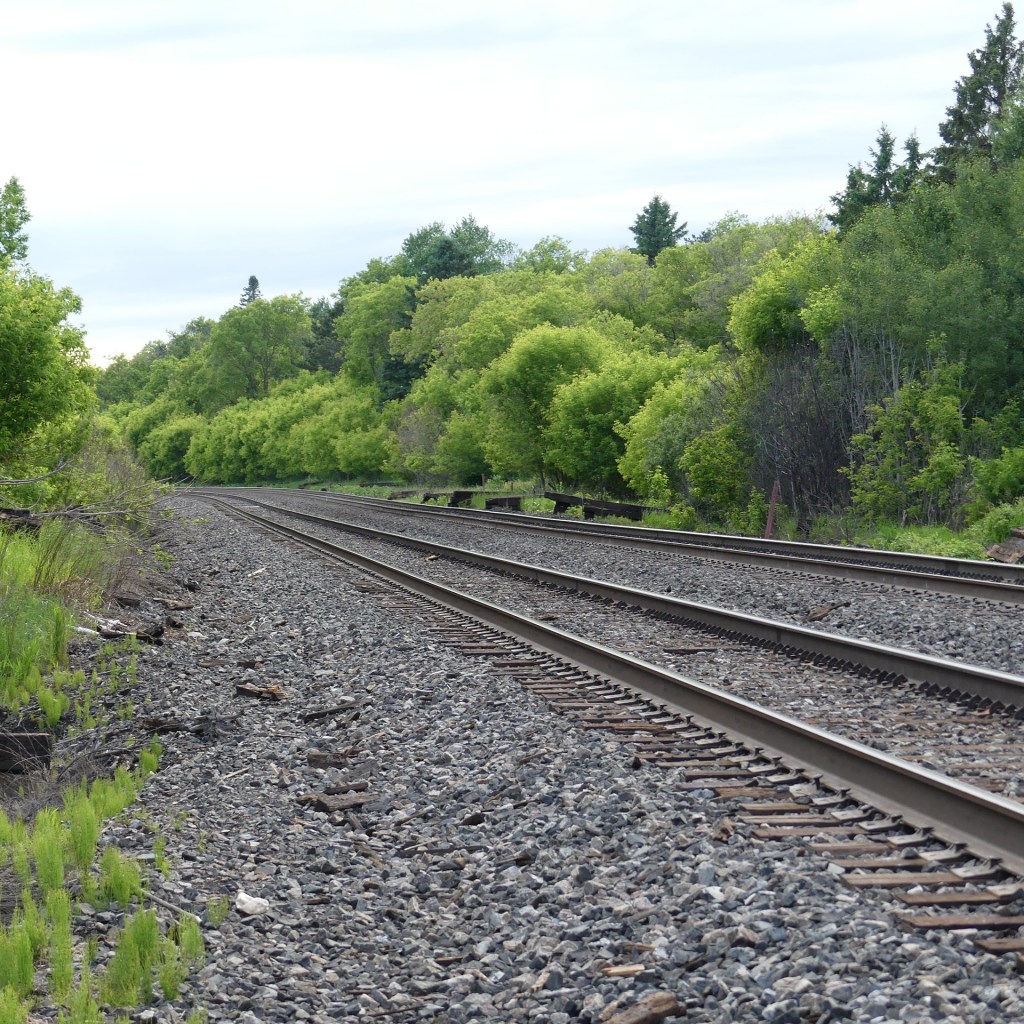
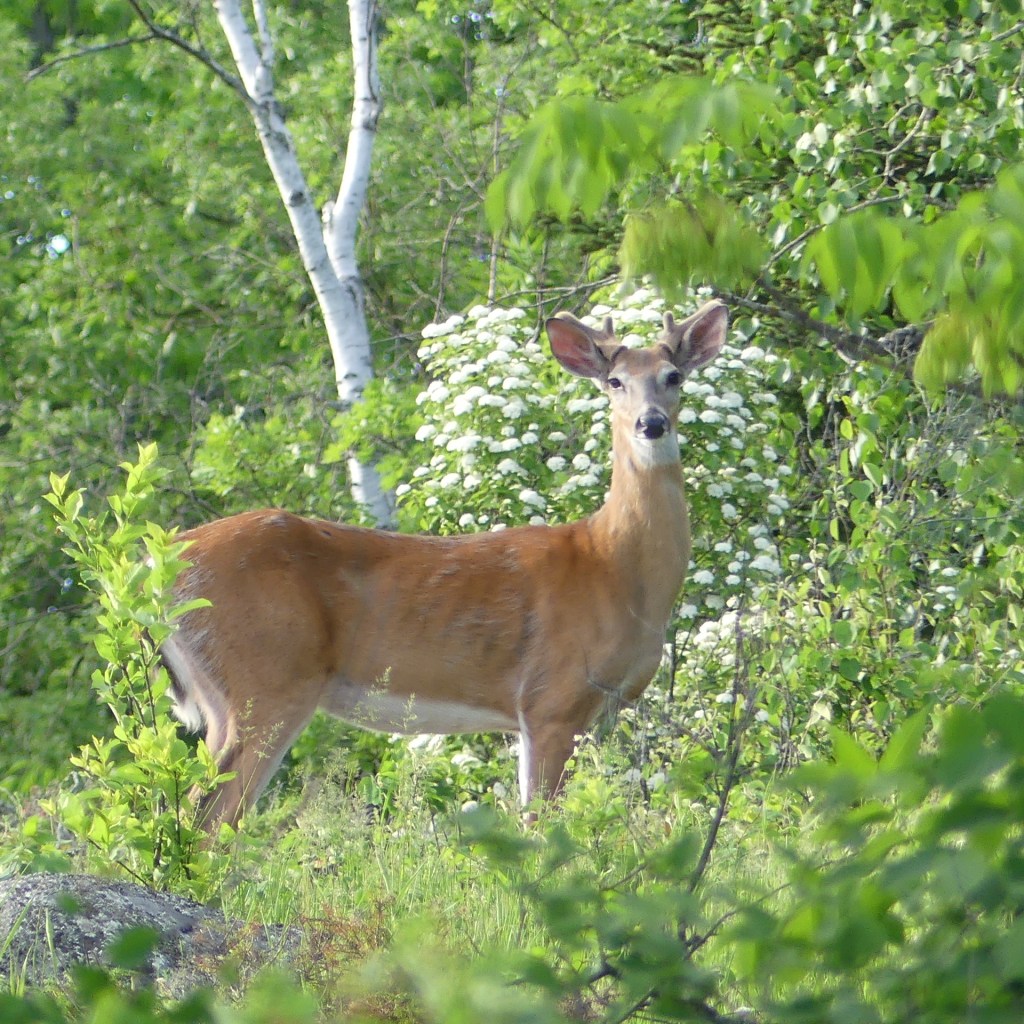
That evening, we took Sierra ashore along what turned out to be a snowmobile trail, which wound through the woods and eventually delivered us to a set of railroad tracks — and two very startled white-tailed deer who clearly had not expected company. Back at the boat, we spent the next solid hour doing what every dog owner in tick country learns to do: brushing Sierra out completely and conducting a full tick check on each other. It has become as much a part of our anchoring routine as setting the hook. Unglamorous? Yes. Necessary? Absolutely.

The next morning, I decided Sierra deserved a gentler outing. I loaded her into the dinghy and motored over to the small community of Keewatin, where we walked along proper sidewalks through a beautifully manicured Beatty Park. No snowmobile trails, no railroad tracks, no deer, and — fingers crossed — no ticks. She trotted along happily, and honestly, so did I. The wilderness is magnificent, but sometimes a well-kept park and a flat sidewalk are exactly what the crew needs.

North to Canada

We said a fond goodbye to Bobbies Bay on Oak Island, grateful for the shelter it had given us and the muddy little hike through the woods to Sunset Resort that Sierra had thoroughly enjoyed. With the anchor up and the bow pointed northwest, we set our sights on the NW Angle — the northernmost point of the contiguous United States — and whatever lay beyond it.

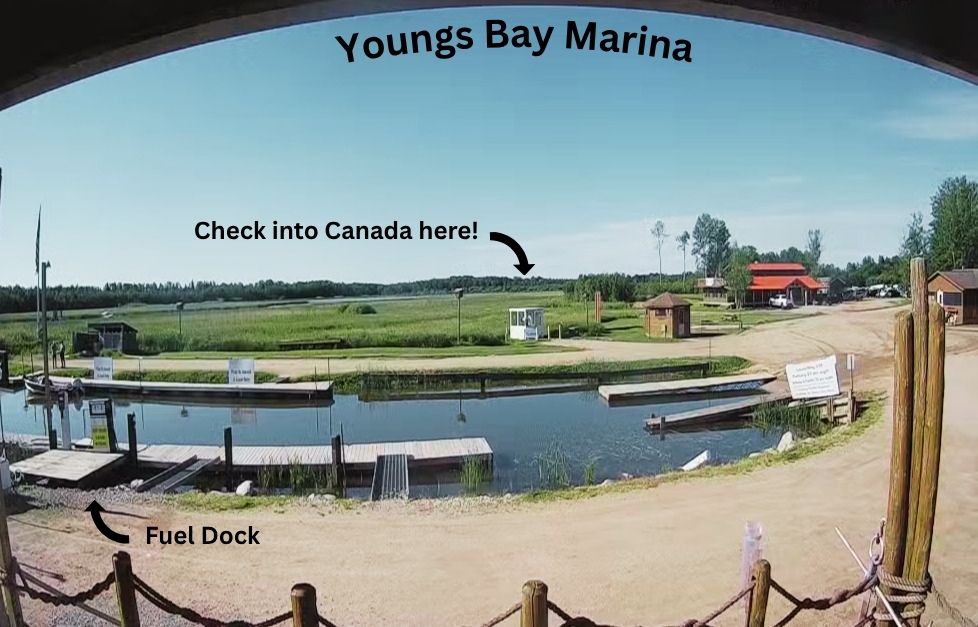
One thing we’re learning out here is that “marina” means something different on Lake of the Woods. Forget the fixed docks and ship’s stores we know from the coast or the Caribbean. Out here, the boats are small fishing rigs, and Bearcruzer qualifies as a large vessel. We pulled cautiously through the shallow entrance of Youngs Bay Marina and eased onto their fuel dock — Mike’s captaining skills on full display — topped off our tanks, snapped a few photos, and then did something we’d never done before: checked into Canada via a white handheld phone mounted on a booth near the dock. No appointment, no border crossing, no lineup. Just pick up the receiver, follow the CBP officer’s instructions, and answer a few questions. When they asked how long we planned to be in Canadian waters, we said at least a couple of weeks. The officer paused and said, “How about 21 days?” Being the sixth largest lake in the US after the Great Lakes, he probably knew better than we did. We took the 21 days.

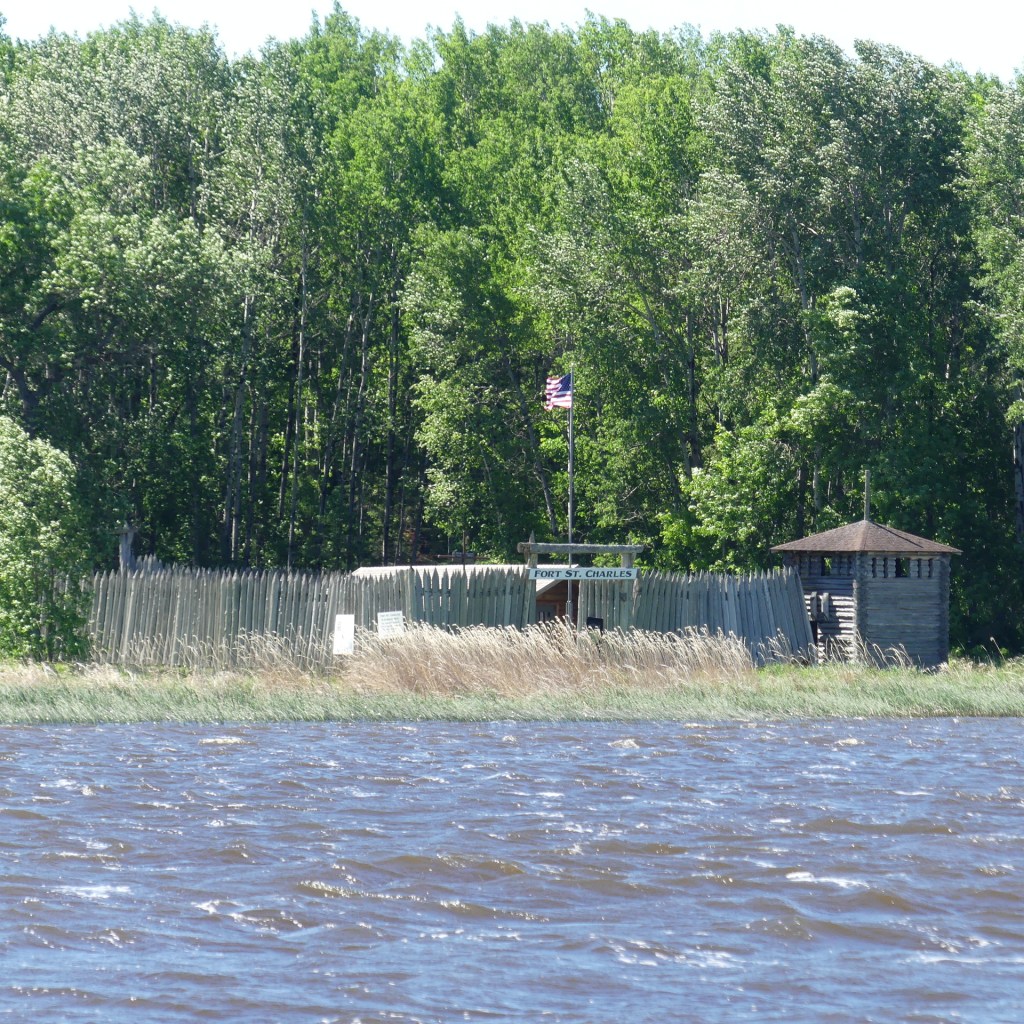
Just north of Youngs Bay, we made our way around Magnuson Island to get a look at Fort St. Charles — a re-erected French fur trading post from 1732 that served as a vital base for western exploration. We really wanted to go ashore and poke around, but the wind was blowing hard out of the northwest and straight onshore. The fort wasn’t going anywhere, but Bearcruzer might have, so we settled for photos from the water and pointed ourselves further north in search of a calm anchorage for the night.

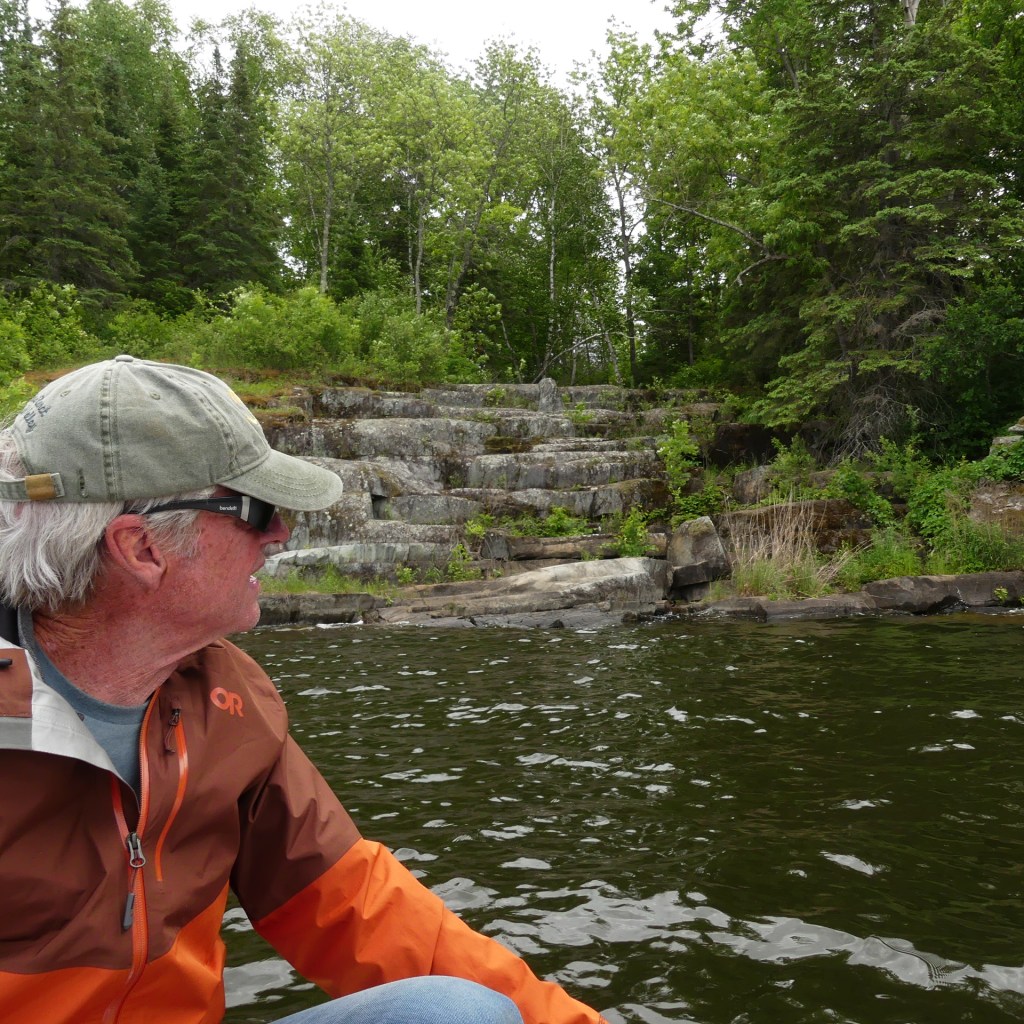
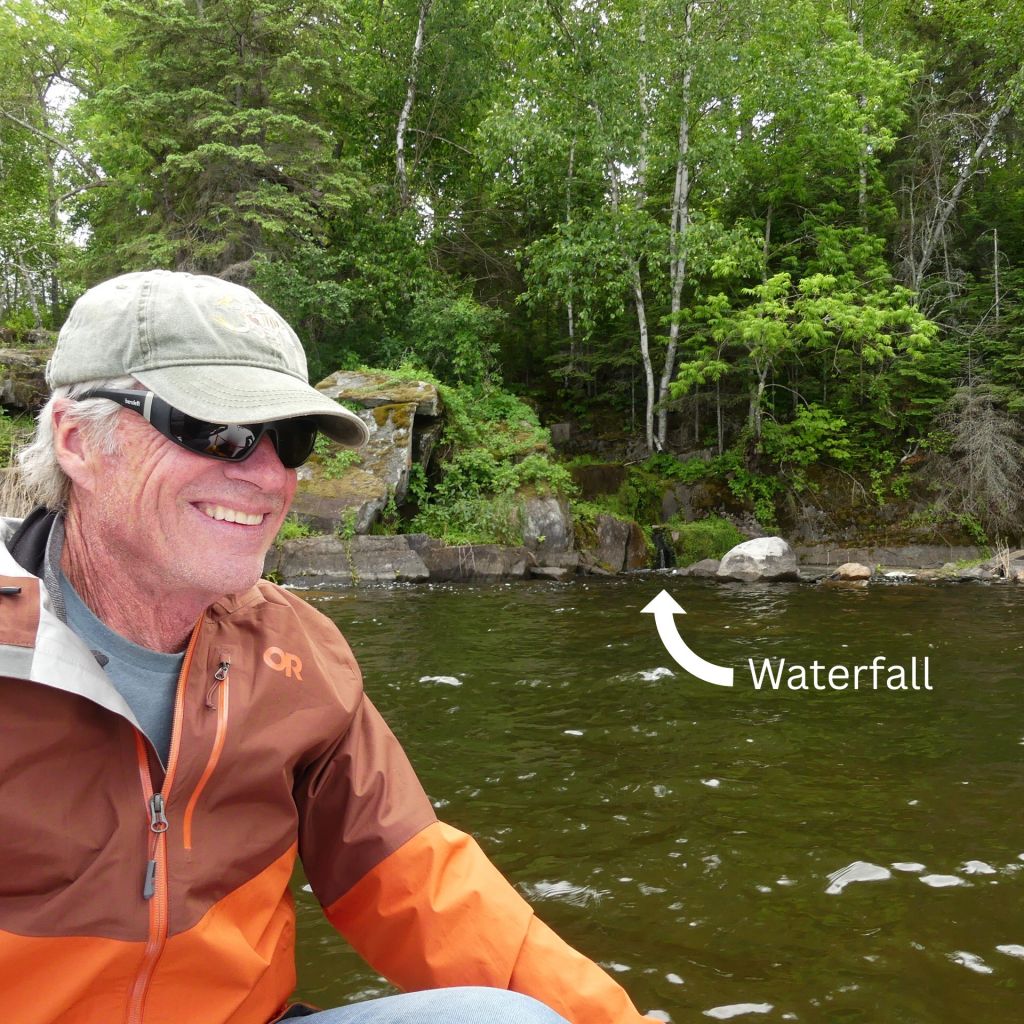
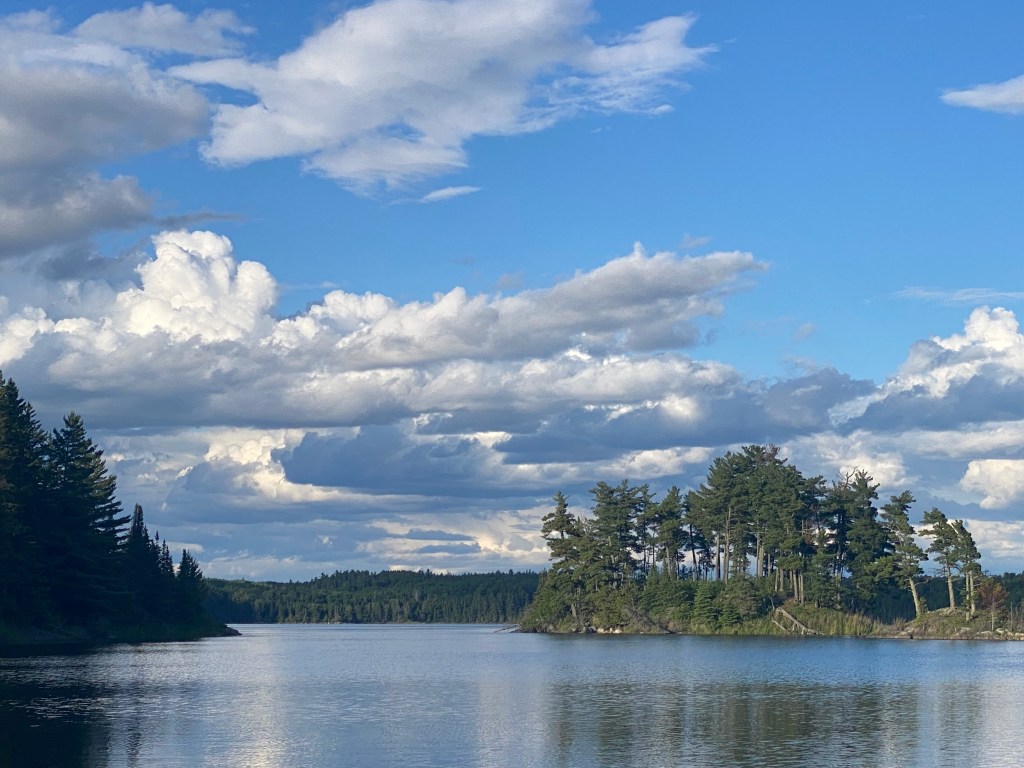
The further north we traveled, the more dramatic the landscape became. Lake of the Woods was carved by glaciers, and it shows — granite island outcrops rise straight out of the water, draped in dense moss, ferns, and lichen, with a remarkable mix of southern hardwoods and boreal forest growing right down to the shoreline. It feels ancient out here, in the best possible way.

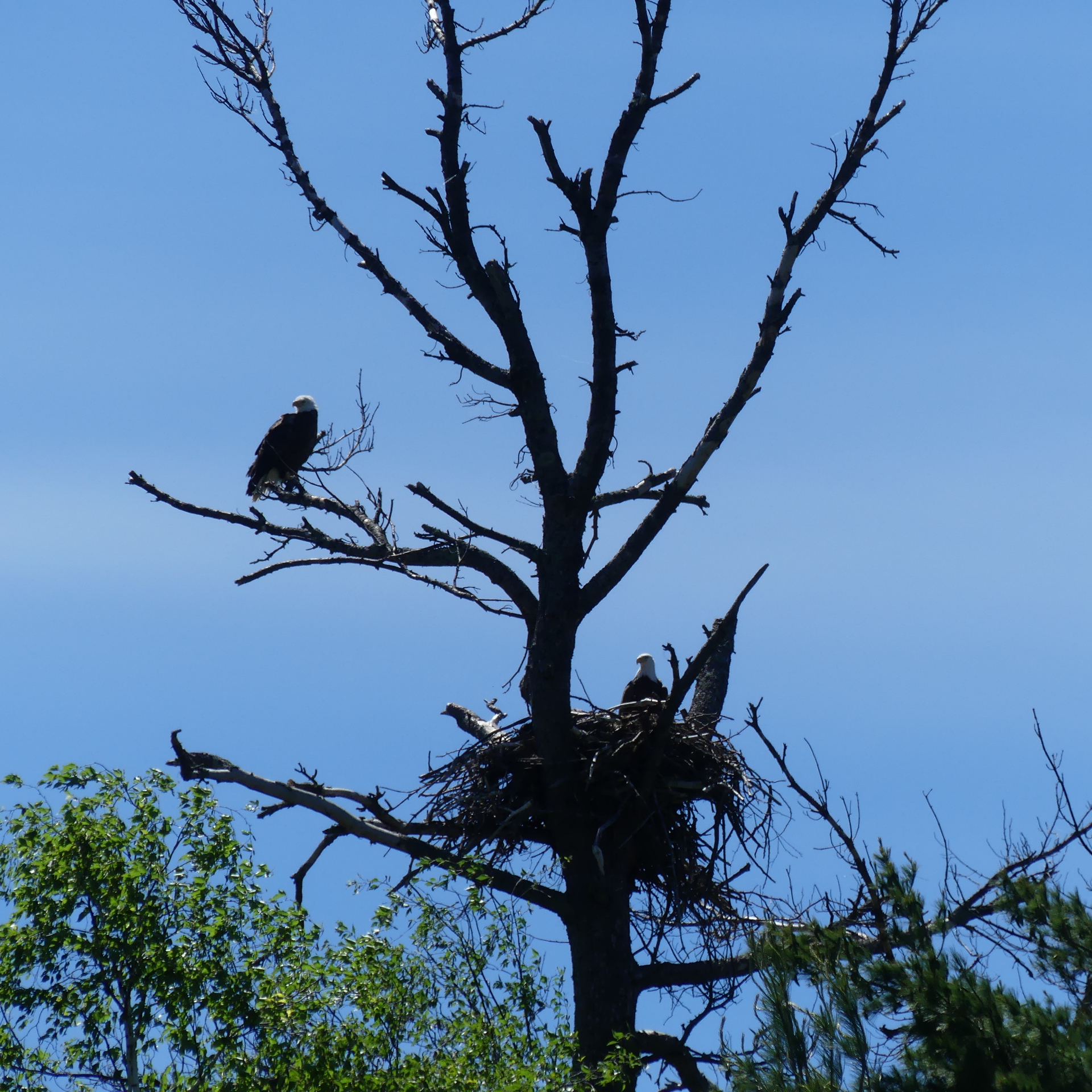
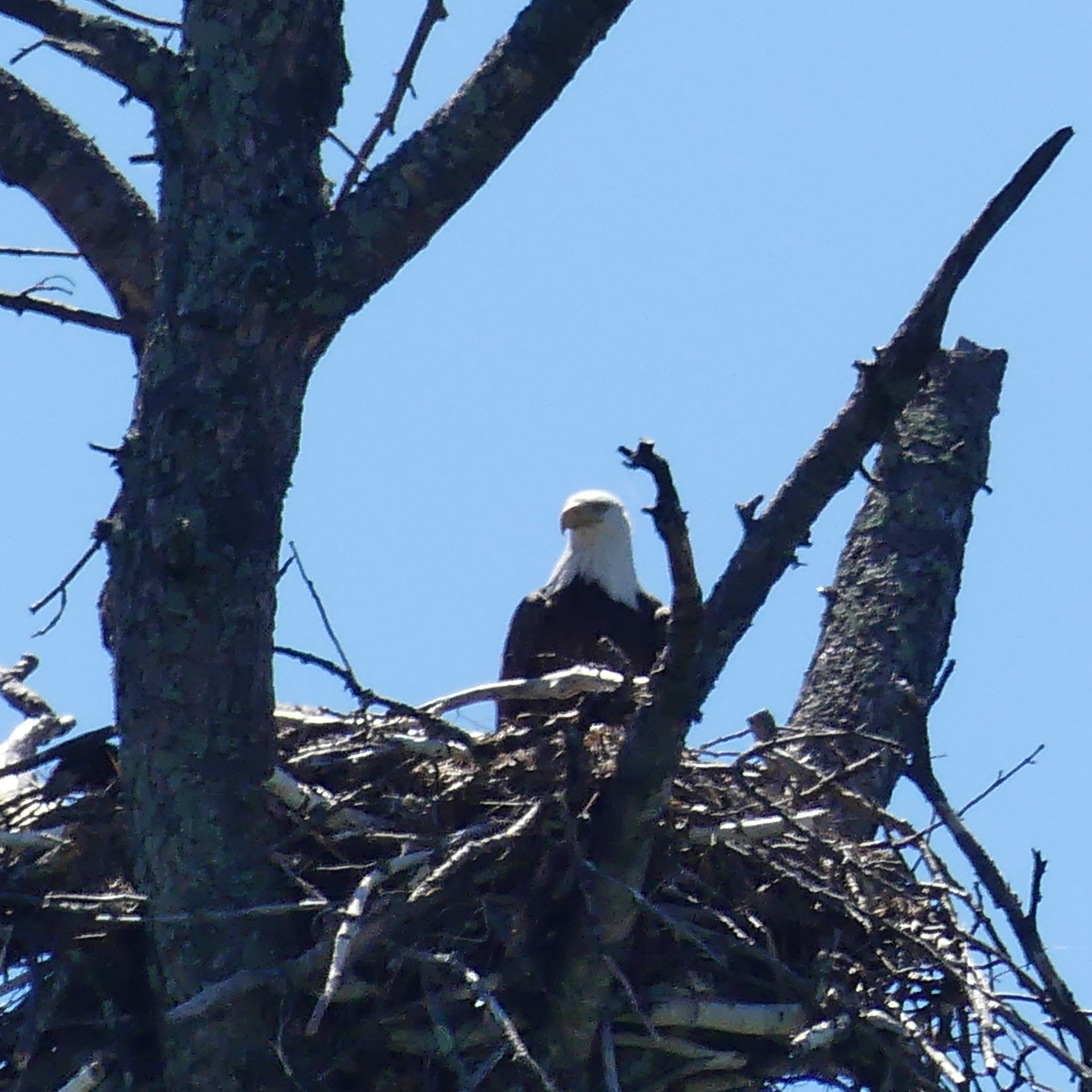
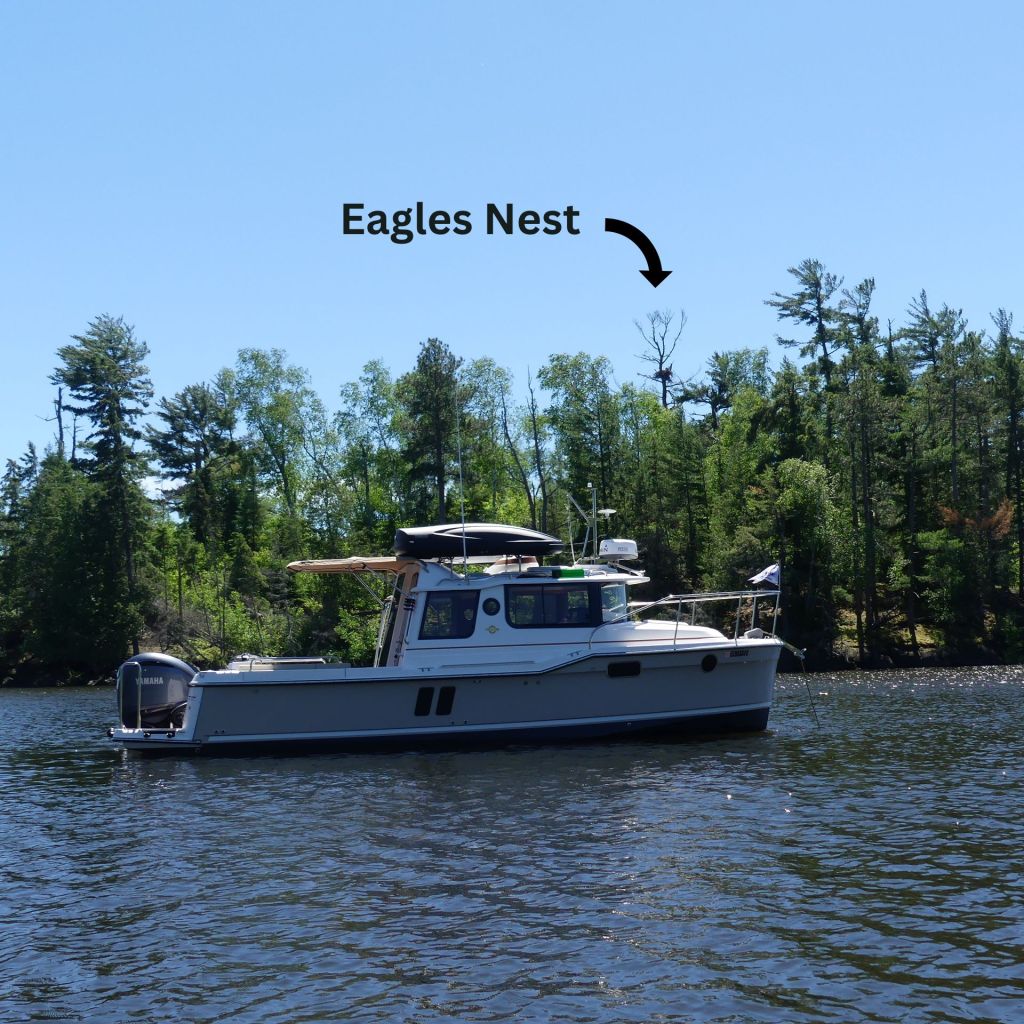
Following the main track north toward Kenora, we passed Cochrane Island and noticed a small, unnamed island tucked beside it, with a calm patch of water between them and a little beach just big enough for Sierra to stretch her legs. We dropped anchor and barely had time to set it before we spotted them: a pair of Bald Eagles perched in a dead tree directly overlooking our anchorage, keeping a watchful eye on the new arrivals.

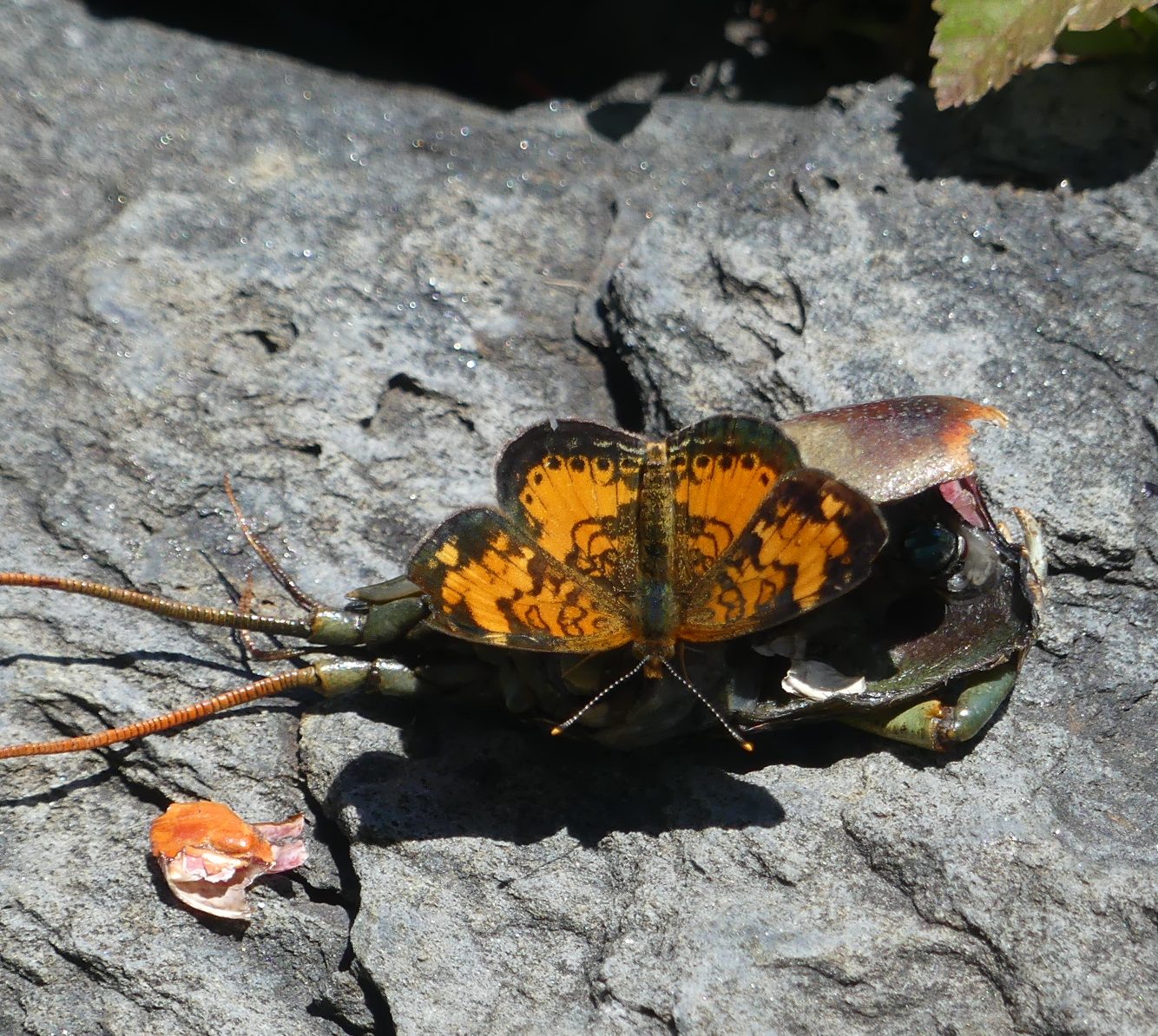
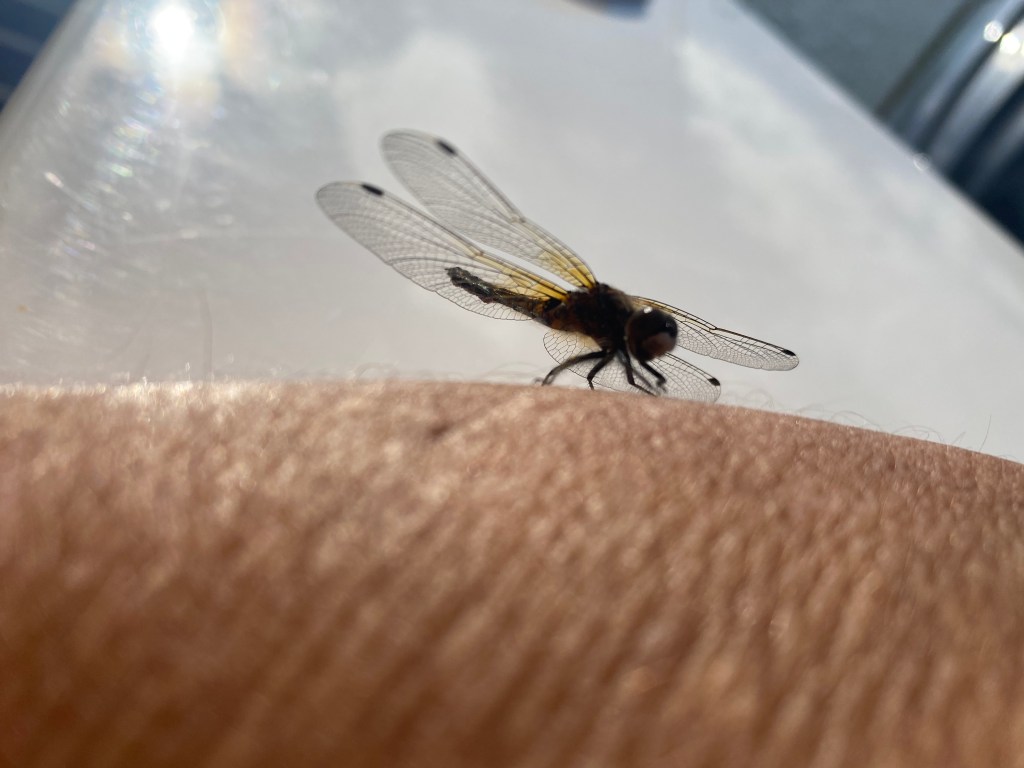
Then came the butterflies and dragonflies across the bow — always a welcome blessing.

We dinghied ashore and walked the little beach with Sierra, and as if the eagles weren’t gift enough, we found a couple of fishing lures along the water’s edge. That evening we sat in the cockpit and watched as the eagles weathered a noisy bombardment from the neighboring crows with complete dignity, and brought food in to their nestling as the light faded. Their calls echoed across the water long after dark.

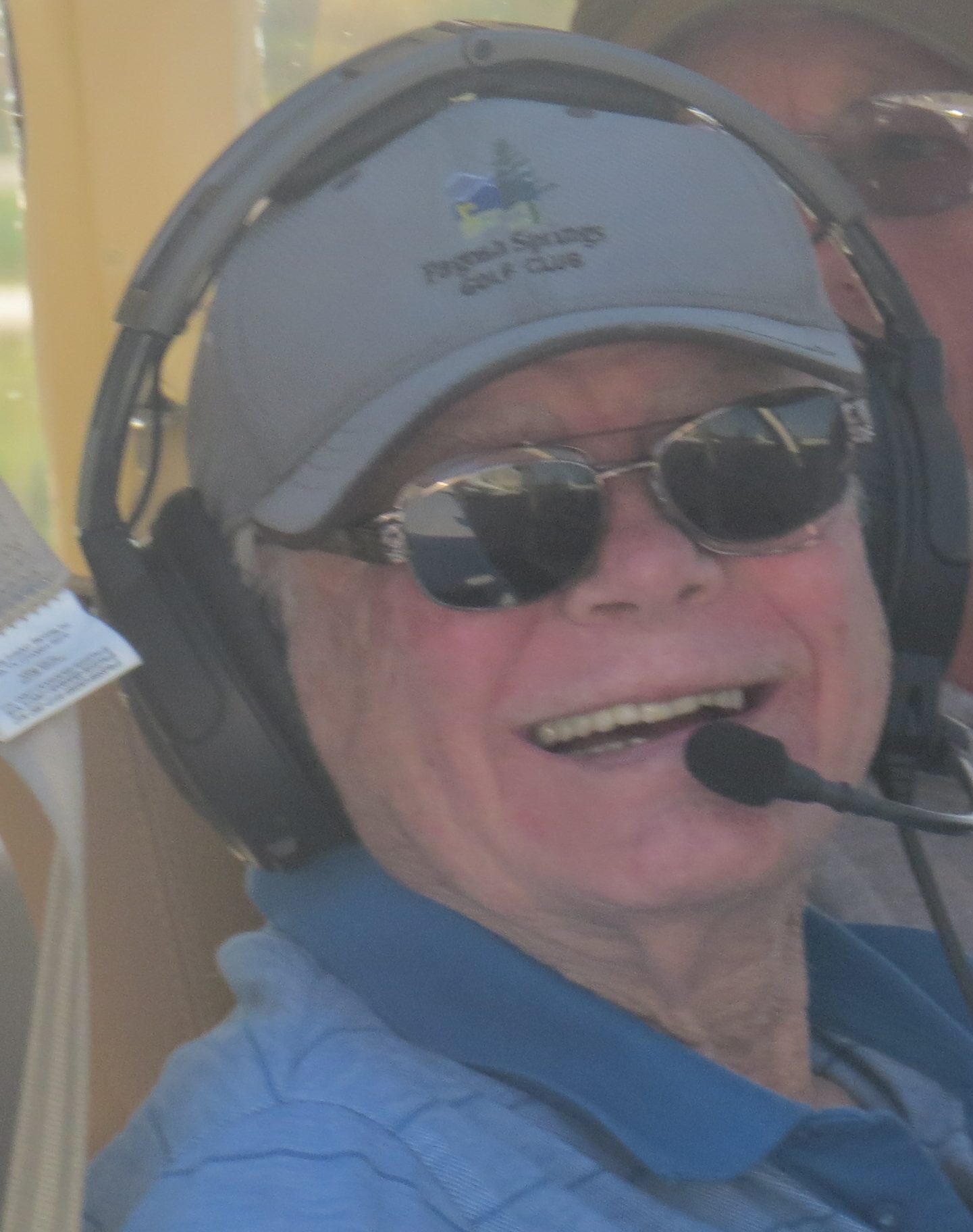
We thought of Dad. He would have loved every minute of this — the eagles, the wilderness, the quiet. He is soaring with them now, above this little bit of heaven on earth.

Miss you, Pops.

Arlo Martin Sperry Jr 9/27/37 – 03/06/26

Sometimes the weather likes to test us!

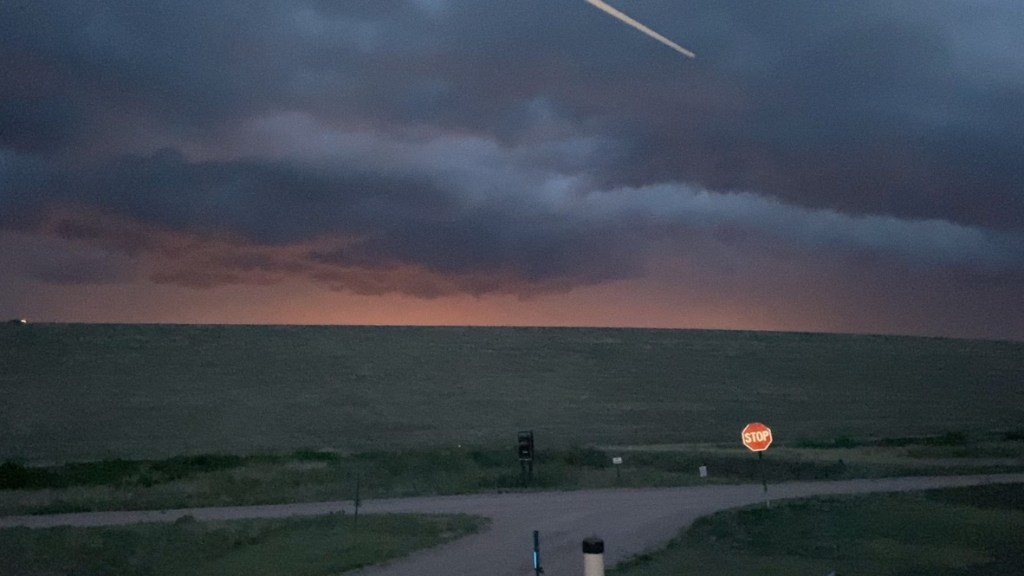
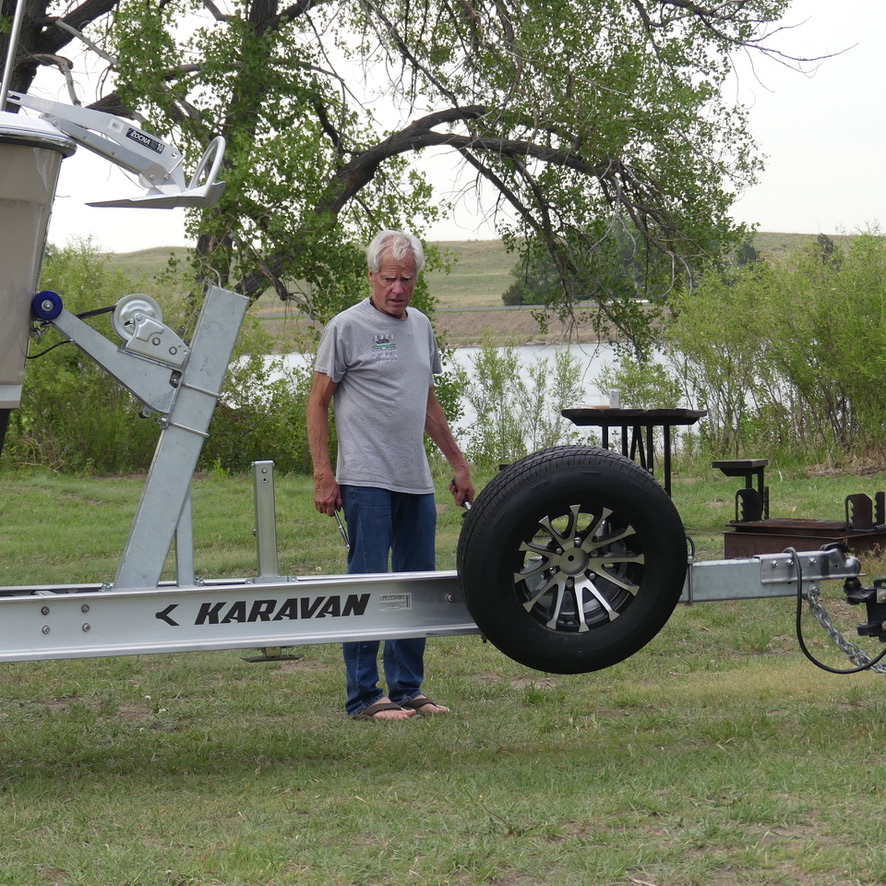
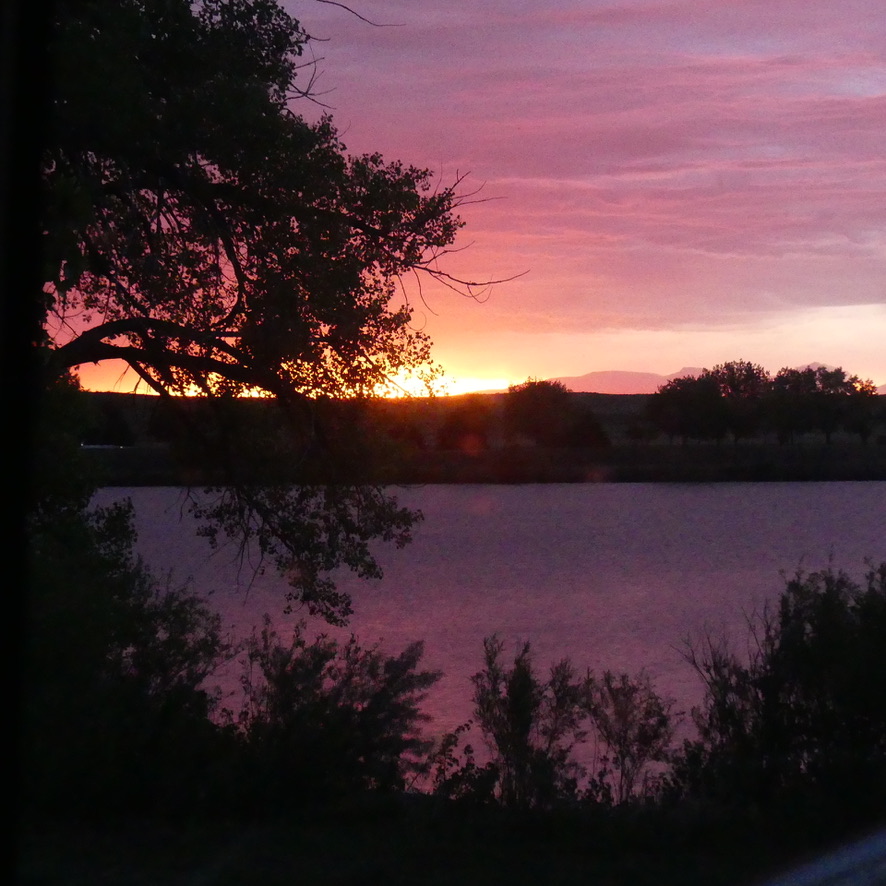
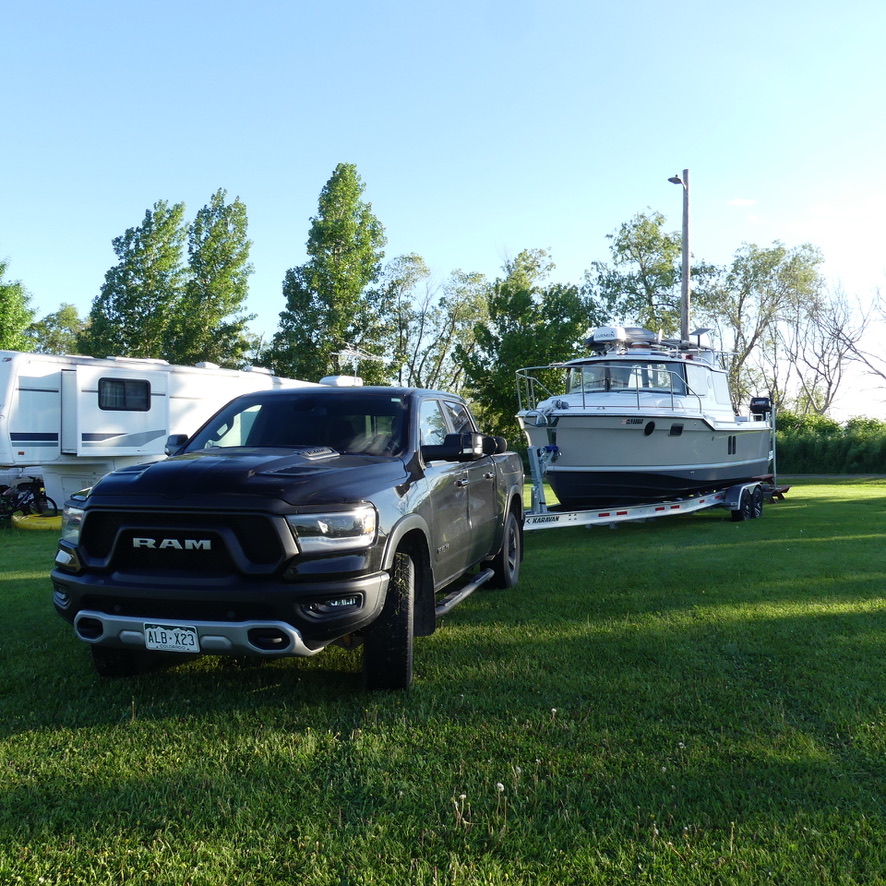
Our first day on the road, we were met with rain and winds from just east of Denver all the way to Ogallala, NE, where we stopped at Lake Ogallala State Recreation Area for the night.   We opted for the West side Campground as it was less crowded, and we had our choice of beautiful Lakeside Pull-Through Camp spots where Mike proceeded to check and tighten any loose bolts on the trailer. After giving Sierra a much-deserved walk, we settled in for a beautiful sunset followed by an amazing lightning storm.

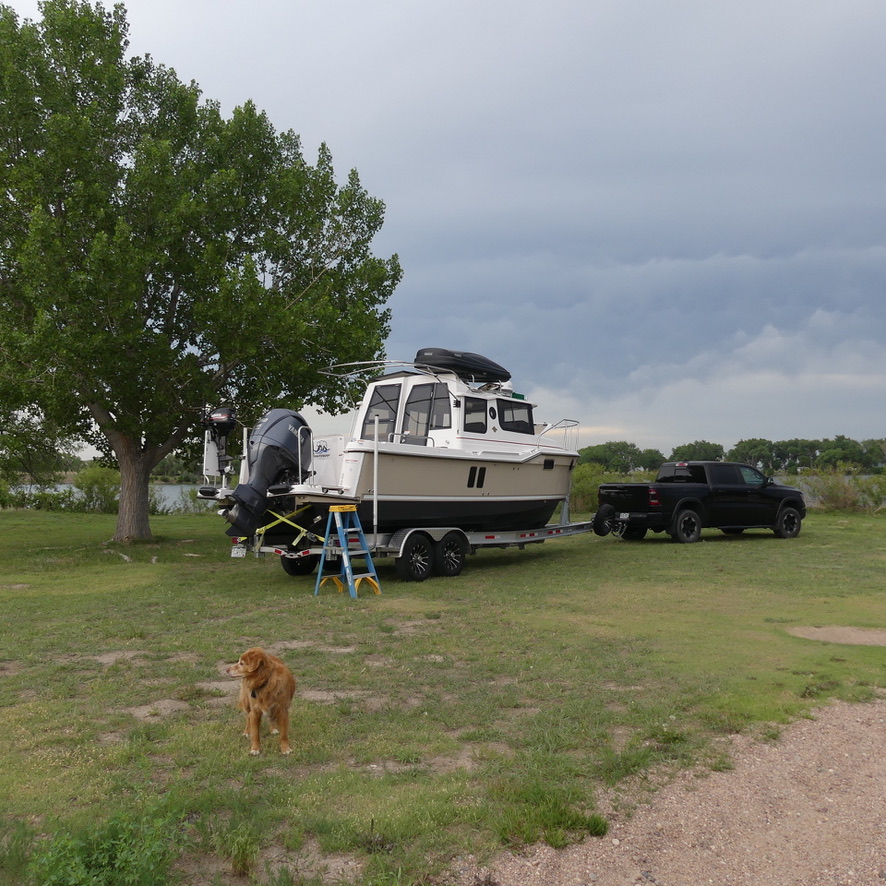
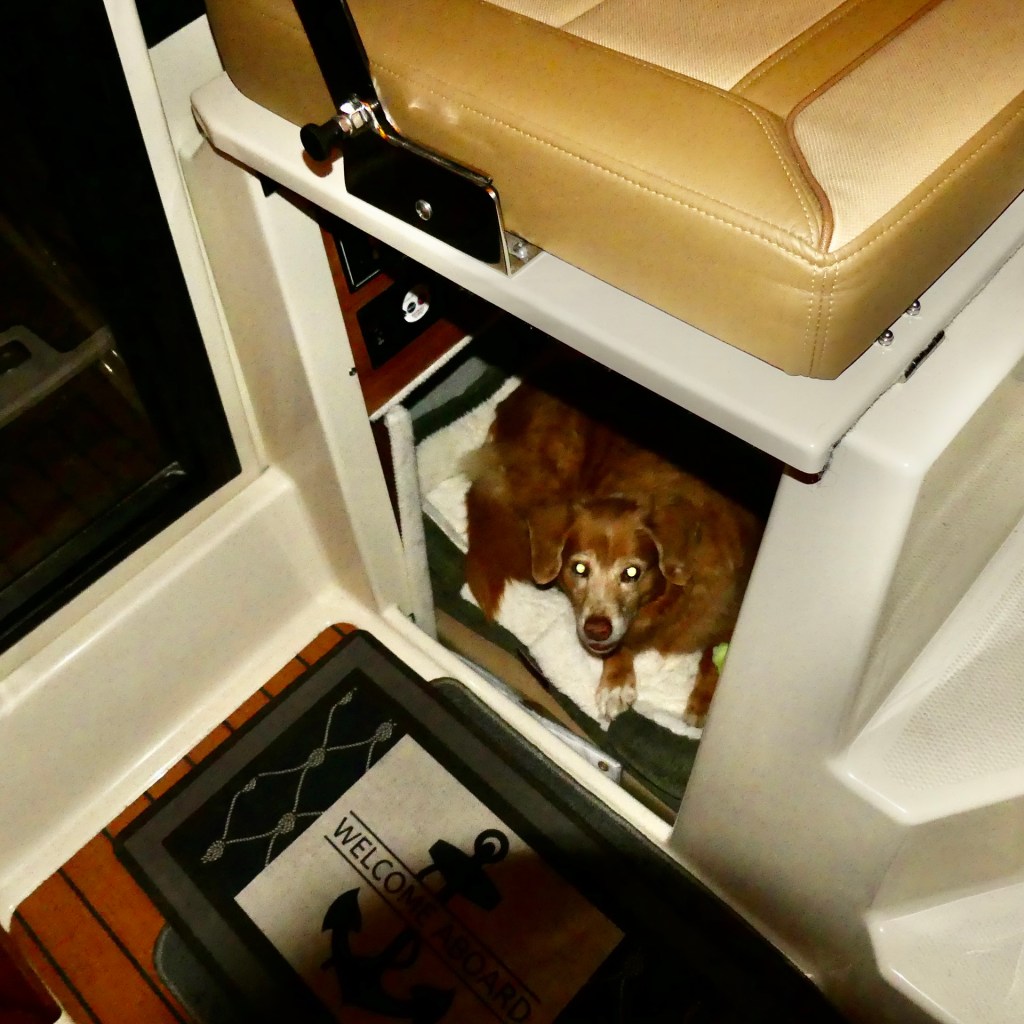
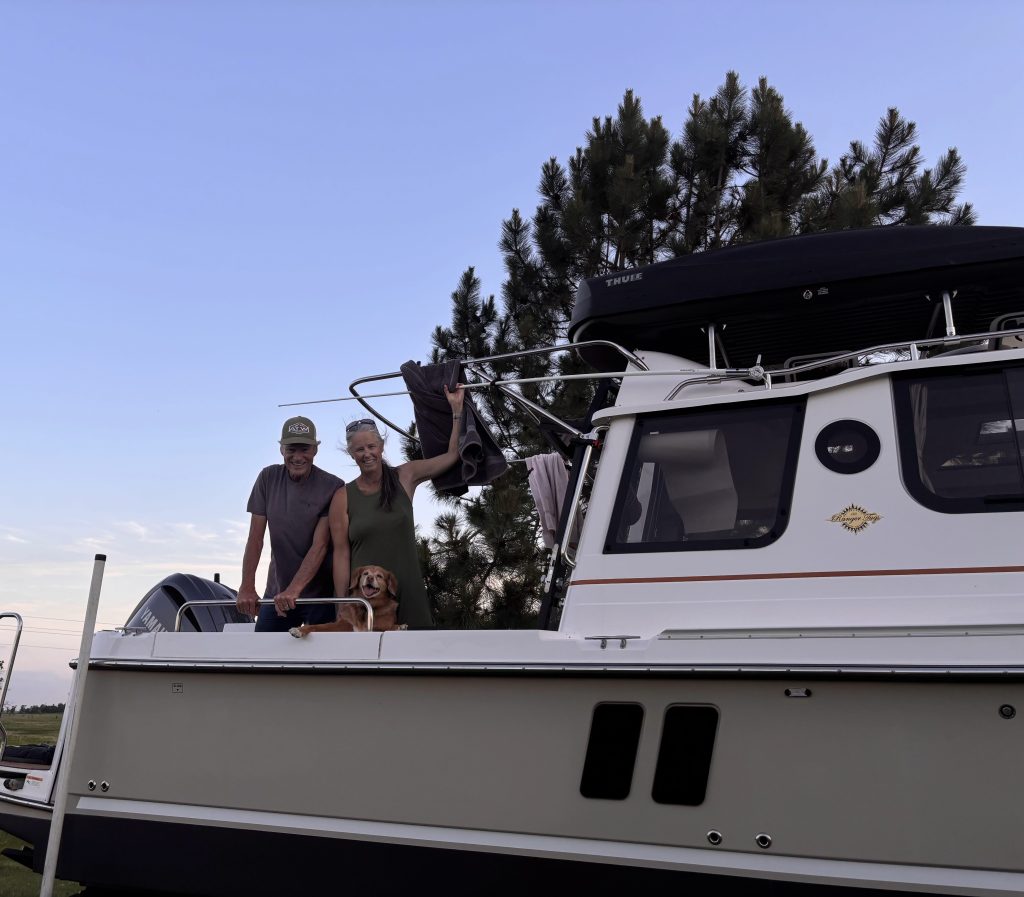
To clarify our camping situation.  We are staying on the boat on the trailer while traveling.  It is set up to provide us a warm, dry place to sleep, eat, and get out of the weather.  Sierra even has her own little cubby.   While on the trailer, we use a step ladder to get on and off, and Sierra now waits for us to lift her on and off after she learned the hard way about boat-to-ground distances…she is OK.

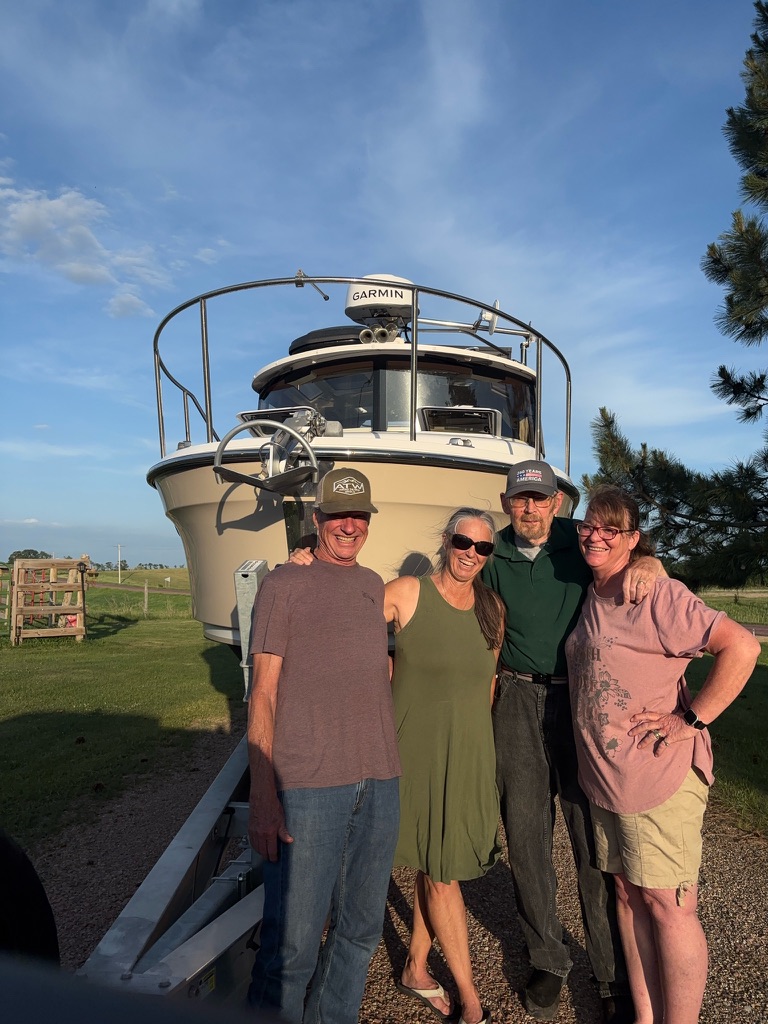
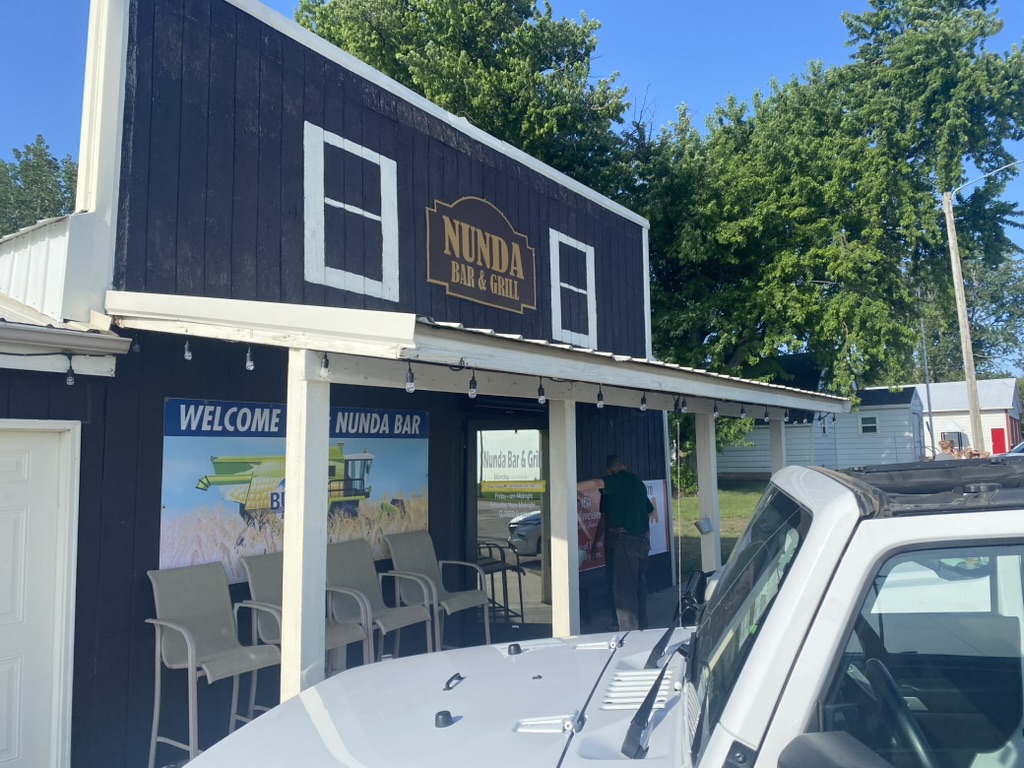
Our 2nd day driving we were still challenged with both wind and a little rain but made it just outside of Nunda SD where we experienced the very best of what Harvest Hosts is all about thanks to our hosts George and Linda Fenwick — the private tour of the Waterfowl Production Areas, dinner at the Nunda Bar & Grill (rated 4.8 stars, by the way — clearly a gem), souvenir t-shirts, and a storm shelter offer during a tornado watch. That’s hospitality you don’t forget.  Linda’s elective collection of yard art along her walking paths made exploring their property fun.  It was a pleasure spending time together.

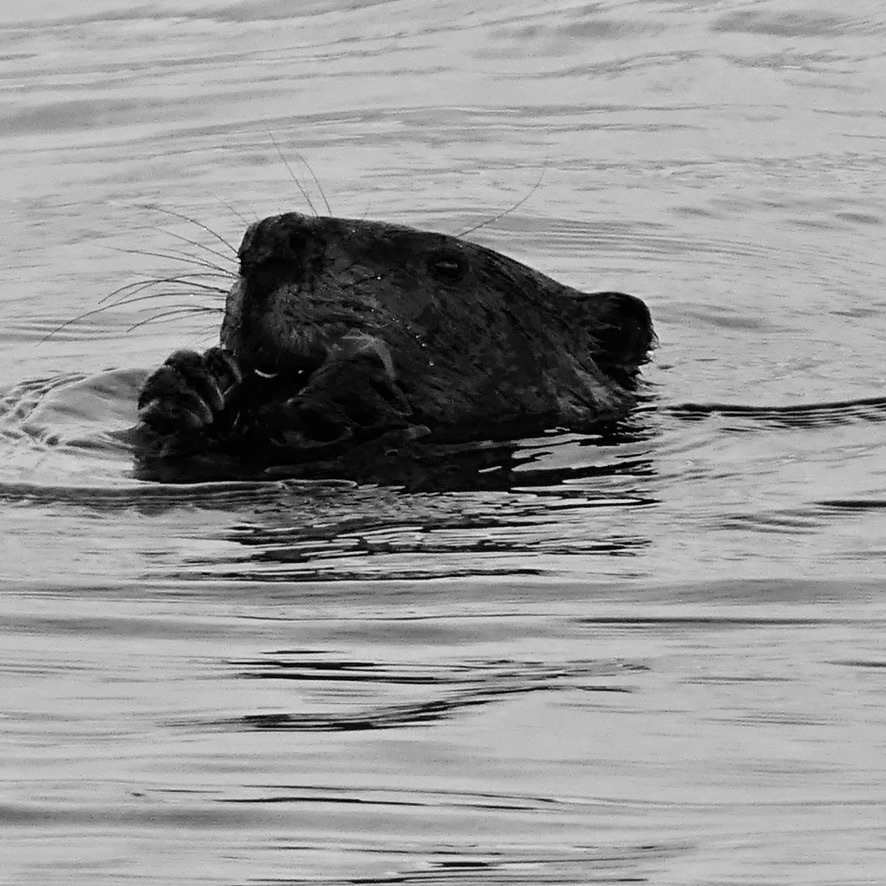
On our 3rd day, we pulled a 12-hour drive day with rain again and several detours.  We arrived in Baudette, MN. While exploring our choices for boat launches and a place to leave the truck and trailer, Sierra met a western painted turtle and saw her first beaver at Zipple Bay State Park She was enthralled and wanted to swim after it but it slapped its tail and dove under the water.  Nothing quite like a tail slap to establish the pecking order!

We pulled into Warroad City Campground around 8:00pm and found one of their larger camping spots with electricity available. With the wind still out of the NW at 18 – 20mph with rain expected, we settled in for a couple of days.   We talked to the ranger the next morning and were told it would be no problem leaving the truck and trailer.  The Campground itself is extensive with many of the long-term campers looking like they have been handed down through generations.   After 2 nights at the campground we decided we could wait no longer, so with the wind and waves finally letting up a little we readied Bearcruzer for her aventure onto Lake of the Woods. We felt secure knowing this boat was built to handle wind and waves.   With over 14,500 islands straddling the US/Canada border there is no shortage of places to explore….so where to now?    Come along and find out!